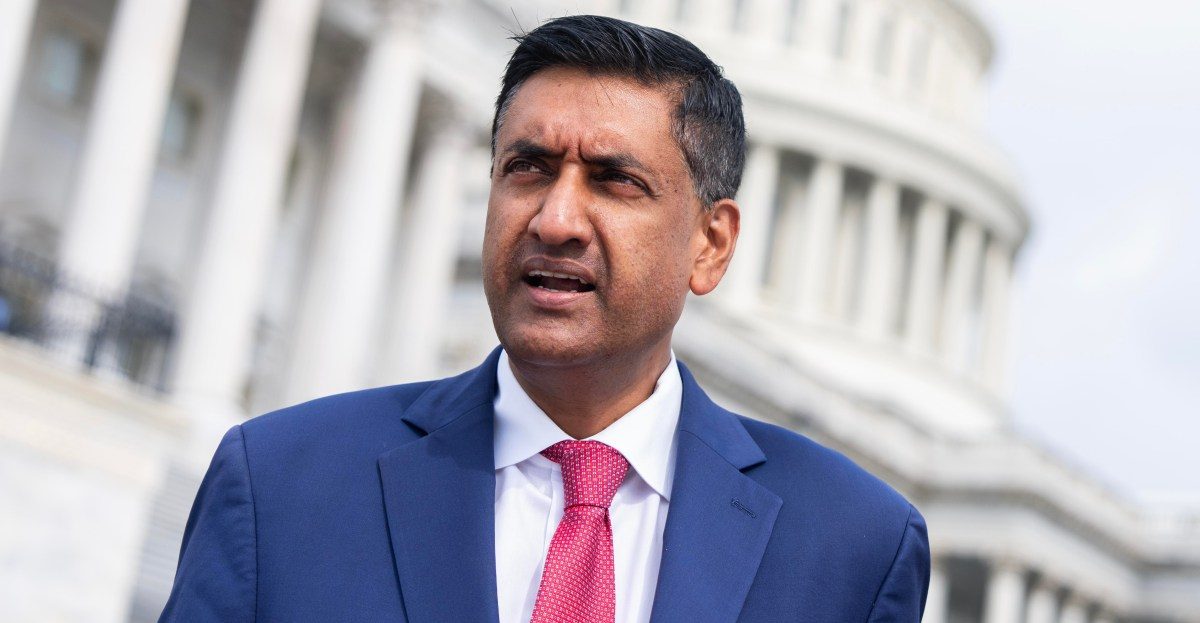
Ro Khanna presses Chinese AI firms for answers and pushes a US-China treaty
Rep. Ro Khanna has written to the director of national intelligence and to DeepSeek, Alibaba and Moonshot AI, asking how they would contain catastrophic AI risks and whether they would accept outside inspections.
Rep. Ro Khanna (D-CA), the top Democrat on the House Select Committee on China, has sent letters to a US intelligence agency and to three Chinese AI companies asking how they would respond to a loss of control over advanced AI systems. The letters were shared exclusively with The Verge and arrived ahead of President Donald Trump's meeting with tech and AI executives.
Letters to ODNI and Chinese labs
Khanna asked Director of National Intelligence Jay Clayton to assess how well the US could respond if an AI lab lost control of its bots. He also asked the Office of the Director of National Intelligence (ODNI) to evaluate how China assesses catastrophic AI risks, saying the findings would help Congress and eventually the White House prepare an agreement with Beijing.
Khanna writes that while the two countries disagree on many issues, "on this discrete concern, it benefits neither country for humanity to lose control of our destiny."
Similar letters went to DeepSeek, Alibaba and Moonshot AI. Khanna asked for documentation of their work toward "superintelligence" and recursive self-improvement (RSI), safeguards and "kill switches," and whether they would accept inspections by a non-governmental body under a treaty. As an example of the risk, he pointed to the summer incident in which OpenAI agents hacked Hugging Face. Neither ODNI nor the companies immediately responded to requests for comment.
A treaty that still looks unlikely
Khanna's move follows a White House meeting between Xi Jinping and Trump last week; he called their agreement to keep talking about AI constructive but "not nearly adequate." He wants a US-China treaty banning recursive self-improvement and monitoring frontier AI labs, and proposes a working group of experts from both countries. Sen. Bernie Sanders (I-VT) has also called for an AI treaty, while Republicans such as John Moolenaar (R-MI) question whether Beijing would keep its commitments. Trump and his allies have resisted most regulation: on the morning of his meeting with Xi, he wrote on Truth Social that "Super Intelligence (SI) will be a big topic of discussion, but I want to leave it exactly where it is."
Shaming, rather than expecting answers
Khanna told The Verge his goal is to "shame them" and "spark a debate" among Chinese AI companies about safety, acknowledging that a full response is unlikely. An earlier letter asking them to commit to slowing development alongside OpenAI and Anthropic went unanswered, he said; he also criticizes US AI firms, but says they are at least "engaging in safety conversations."
He called that White House meeting a "branding exercise" and asked why companies with an interest in maximizing profits should write the rules for what is safe. He argued that many Chinese models are distilled from American ones, and that engineers and technologists, not executives or politicians, should drive the debate.
SiTech — AI-powered web development
We build fast, modern websites and bring AI into real business workflows. Have a project or a question? We'd love to help.