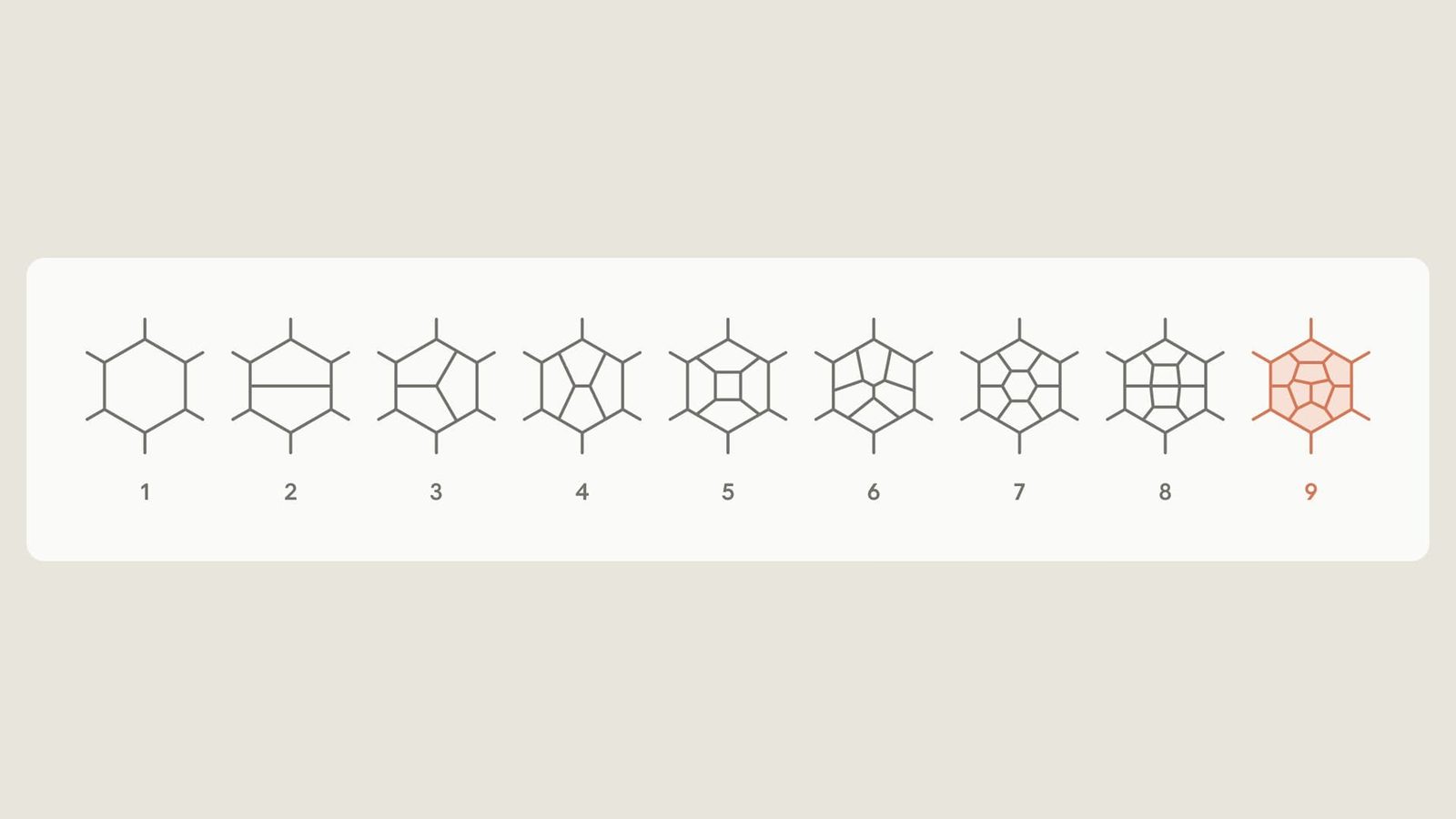
Claude computes a nine-loop amplitude: a physicist's challenge met in a month
Anthropic has published a guest post by physicist Matt von Hippel: running in the Claude Science platform, Claude computed a six-particle scattering amplitude to nine loops in N=4 super Yang-Mills, and Lance Dixon validated the result.
Anthropic published a guest post by physicist and science writer Matt von Hippel on 25 September. He describes how Claude computed a six-particle scattering amplitude to nine loops in N=4 super Yang-Mills, the problem he had posed as a public challenge in August.
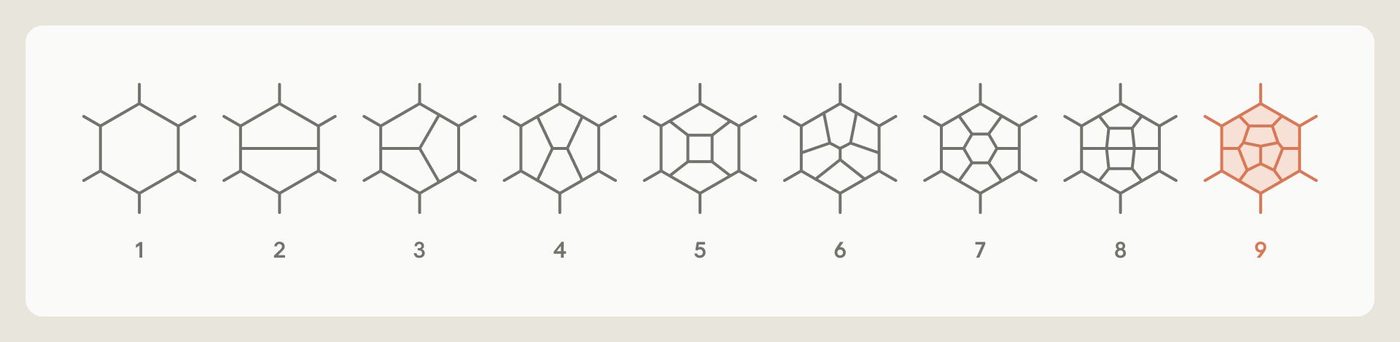
What amplitudes, and loops, actually are
Scattering amplitudes are formulas that tell physicists how likely subatomic particles are to react with one another. Predictions are checked against experiments such as the Large Hadron Collider; a mismatch could point to new physics, including dark matter.
Exact formulas are so hard to compute that physicists cut the calculation off at a certain number of "loops", a measure of how complicated the interactions can get. More loops mean a closer answer and a costlier computation. Most amplitudes are known only to two loops, a few to three.
A challenge answered in a month
Von Hippel wanted one concrete test: an LLM solving a problem that looked out of reach not for lack of ideas but for lack of computing that academics can afford. He asked AI companies to reach nine loops in N=4 super Yang-Mills on academic-scale computing.
Anthropic's physicists Liam Fitzpatrick and Siddharth Mishra-Sharma took the challenge. N=4 super Yang-Mills is a toy model: it explains nothing in the real world, but it is used to stress-test techniques because it is easier to calculate with. At the end of August they contacted von Hippel and ran Fable 5.1 in Claude Science, a paid platform for scientists.
Claude was given a single prompt: compute the six-particle amplitude in planar N=4 SYM at nine loops. After that they mostly told it to keep going: "I'm going to sleep… Keep working on this until I tell you to stop."
The calculation was completed two ways, with the bootstrap method and through a related object called a form factor. Either approach would have cost roughly $1,000 to $2,000. The bootstrap run, in Python with SymPy, accounted for about $100, equivalent to 96 CPUs working for a week.
Verification and what the result means
Lance Dixon, a professor of particle physics at SLAC and Stanford University, validated the result independently. He calls the computational recipe fragile: one mistake and "it all crashes down like a failed soufflé". Days later Song He's group at the Chinese Academy of Sciences reported a concurrent nine-loop result, with partial AI help.
Von Hippel's conclusion is that Claude used known methods and found no new physical principle, and that work like this is more within reach than experts assume. Anthropic paid him for the post.
SiTech — AI-powered web development
We build fast, modern websites and bring AI into real business workflows. Have a project or a question? We'd love to help.