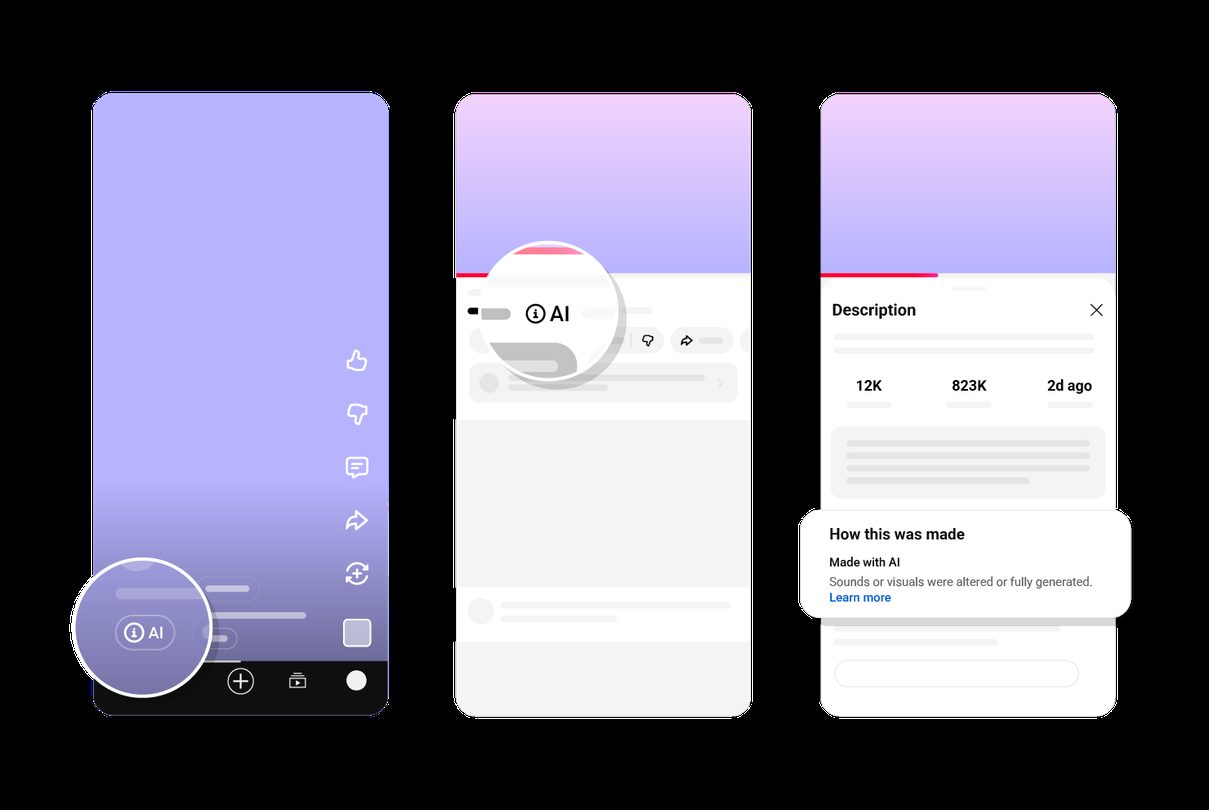
YouTube to automatically label AI-generated videos
The platform announced two updates on 27 May: disclosure labels for realistic AI content move below the player and onto Shorts, while a new detection layer will apply labels automatically from May 2026 even without a creator's declaration.
YouTube is changing how it tells viewers that a video was made or meaningfully altered with generative AI, and will now apply some of those labels on its own. In a post published on 27 May, the platform announced two updates: a more prominent placement for existing disclosure labels, and a new detection layer that can flag photorealistic AI content even when the uploader says nothing about it.
Labels move to the main stage
Since 2024, YouTube has required creators to disclose when they use realistic AI tools and has shown a label on that content. That label is now moving. For long-form videos it will appear directly below the player and above the description; for Shorts it becomes an overlay on the video itself. YouTube calls this the single label format for all photorealistic and meaningfully AI altered or generated content on the platform.
Content that is clearly unrealistic, animated, or only slightly altered is handled differently: the disclosure stays in the expanded description rather than on the player. YouTube says the split reflects what viewers find useful — a prominent notice where a clip could be mistaken for real footage, and a quieter one where it could not.
Automatic detection arrives
The larger change concerns enforcement. From May 2026, YouTube is rolling out internal signals designed to identify AI-generated material. If a creator does not state whether AI was used but the systems detect significant photorealistic AI use, the platform will apply a label by itself. Creators keep a way back: if they believe a video was misidentified, they can change the disclosure status in YouTube Studio.
Some disclosures, however, will be permanent — including videos made with YouTube's own generative tools such as Veo and Dream Screen, and uploads carrying C2PA metadata that indicates fully generative AI content.
What the label does not do
YouTube stresses that a disclosure label alone does not change how a video is recommended or whether it is eligible to earn money. The company frames the update as an attempt to balance transparency with creator control, and says the goal is to make it as easy as possible for creators and viewers to have the right information about how a video was made.
SiTech — AI-powered web development
We build fast, modern websites and bring AI into real business workflows. Have a project or a question? We'd love to help.