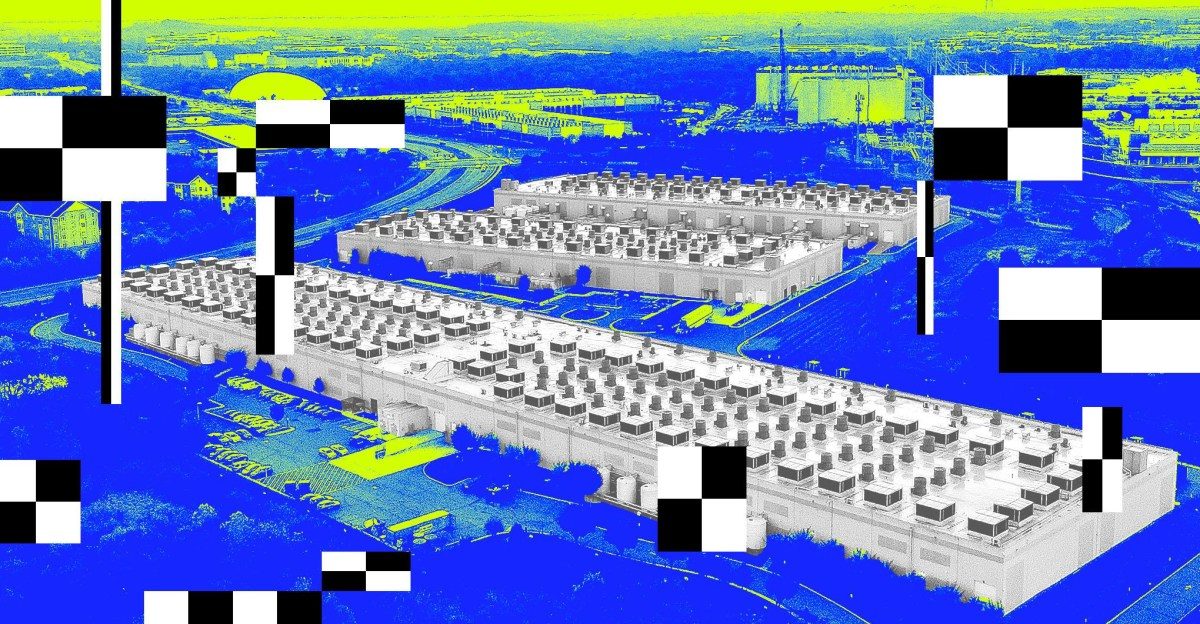
California forces data centers to disclose water and power use
Gov. Gavin Newsom signed seven bills that require data centers in California to report electricity and water consumption and to pay for grid connections, though big reporting gaps remain.
California Gov. Gavin Newsom signed a package of seven bills on Monday that will force data center operators in the state to disclose more about their electricity and water use, and to shoulder the cost of connecting power-hungry facilities to the grid. The rules take effect next year.
What the bills require
Senate Bill 886, Assembly Bill 2383 and Senate Bill 1168 direct the California Public Utilities Commission to create separate power rates for data centers, so that the cost of new infrastructure built to serve them is not passed on to other customers; AB 2383 also pushes facilities toward renewable energy. AB 1577 requires monthly reporting on energy consumption. AB 2619 and AB 2469 require water disclosures, and the latter also makes operators cover the cost of infrastructure upgrades needed to serve them. SB 887 removes categorical exemptions from the California Environmental Quality Act, so data centers face environmental review.
Unclear effect on utility rates
“It’s extremely frustrating to try to understand basic information,” said Mark Specht, senior manager for the climate and energy program at the Union of Concerned Scientists. He co-authored a fact sheet this year describing two possible outcomes. In one, rising demand, expensive transmission connections and the risk of overbuilding if the AI boom fades push costs up for everyone else. In the other, spreading fixed grid costs across more customers lowers bills — but only if data centers also pay into the distribution system that serves smaller customers, while large facilities often avoid those costs by connecting straight to high-voltage transmission. “I wouldn’t say definitively that data centers have increased the cost,” Specht said.
Water use remains opaque
Water data has been just as hard to obtain. Researchers at Santa Clara University contacted every water provider in California districts hosting data centers; citing privacy regulations, providers in every district refused to share usage figures, and very few data centers in the state had environmental impact reports available to the public. The work also found facilities moving from affluent urban areas into rural ones, where small water systems and lower-income communities may struggle with added demand.
Gaps that remain
AB 2619 and AB 2469 require water disclosures only when operators apply for permits or business licenses, so year-to-year consumption stays unknown. “This is in many ways a step in the right direction. It’s signaling to the industry that people are paying attention, that lawmakers are paying attention,” said Iris Stewart-Frey, lead author of the water report and a professor of environmental science at Santa Clara University. She noted Newsom vetoed a similar water disclosure bill last year. “The whole AI wave is not a force of nature, it’s not a hurricane,” she said. “This is something that we can actually regulate.”
SiTech — AI-powered web development
We build fast, modern websites and bring AI into real business workflows. Have a project or a question? We'd love to help.