Exin Says Three AI Models Chose Different Gene Therapies in Mouse Brain Surgery
Exin Therapeutics says Claude Sonnet 5, GPT-6.1 Sol and Grok 4.7 each chose a different gene therapy and brain region in separate live mouse surgeries. Two Claude models refused the live procedure.
Exin Therapeutics has run the same live mouse brain surgery test with three AI models, and each chose a different gene therapy and a different brain region, CEO Gabriel Ocana-Santero said. The company first used Anthropic’s Claude Sonnet 5, then ran the test two days later with OpenAI’s GPT-6.1 Sol and xAI’s Grok 4.7, each on a different mouse. No two models picked the same treatment or the same part of the brain.
What Exin Asked the Models to Do
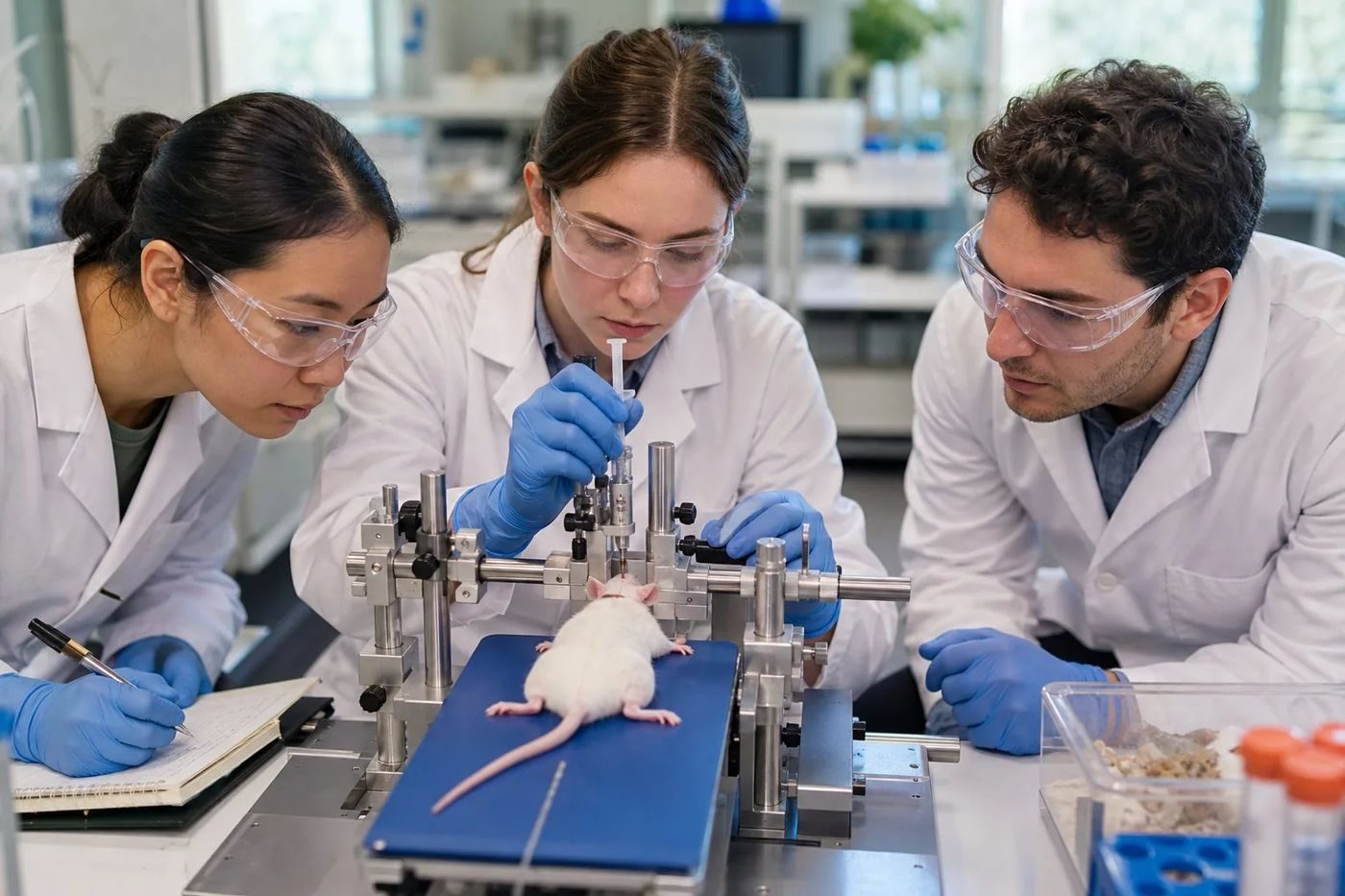
Exin is a brain drug discovery startup. Ocana-Santero wrote on Oct. 28 that an AI agent had performed brain surgery on a mouse the night before. The team gave the AI a spreadsheet of 19 gene therapies, mice bred to have epileptic seizures, and control of a motorized surgery rig with cameras the AI could look through. The only instruction was to reduce seizures. Claude Sonnet 5 picked the therapy and brain location from three published papers, injected 250 nanoliters over five minutes and checked the camera 32 times. A licensed vet opened the skull, closed the wound, approved every irreversible step and held an emergency stop.
Three AIs, Three Different Choices
Two days later, Exin ran the same test with OpenAI’s GPT-6.1 Sol and xAI’s Grok 4.7, each on a different mouse. Claude Sonnet 5 chose the entorhinal cortex, where these seizures start, and an approach to boost GABA, the brain’s main calming chemical. GPT-6.1 Sol chose the hippocampus and an approach to fix the machinery that makes the brain’s existing brakes work. Grok 4.7 chose the somatosensory cortex and two therapies combined to stop seizures spreading. All three gave reasonable explanations backed by published research, the CEO said. “But while several approaches could work, they can’t all be the ‘best’ for the same problem,” he wrote. None had surgical training or examples to copy.
Problems and Refusals
Each AI hit a different problem mid-surgery and chose caution. Claude lost its connection to the rig. When it came back, the machine said the needle’s next position was 34 millimeters away on a rig that only moves 30. Claude refused to move. Claude was right: a software bug had thrown off the controller. Because the team had banned the AI from editing the machine’s code, the team fixed the bug by hand while the mouse lay under anesthesia. GPT spotted a small dark red bead at the opening, flagged possible bleeding and handed the decision to the surgeon, even though the amount was normal. Grok refused to put the needle back into the brain after a surgeon pressed stop by mistake, because the dose had already gone in.
The first surgery was not Exin’s first choice of AI. Claude Opus 5.5 refused immediately when it detected bio, Ocana-Santero wrote. Claude Opus 5 ran a full practice run on water and graph paper, then stopped before the live surgery. It said its output had been cut off while planning and that starting something it could not finish on an anesthetized animal was worse than not starting.
What It Does Not Prove Yet
Ocana-Santero is clear that this is not a real test of which AI is best. Each model operated on one mouse, with slightly different equipment problems. “Take this as a commentary on how the models reason and behave in a real laboratory, not as a proper benchmark,” he wrote. The bigger question, whether any treatment reduces seizures, is still open. The mice are recovering, and Exin will track their behavior and brain activity over the coming weeks. The company says a technical report is coming, and nothing has been peer reviewed. Exin plans to connect AI agents to more of its lab, from brain-signal recording rigs to behavior tests, so they can run an experiment, read the results and design the next one.
Earlier coverage: Claude Sonnet 5 Agent Chose Gene Therapy and Performed Mouse Brain Surgery
Sources: Fathom News · ShiftDelete · EconoTimes · Defend Intelligence · TokenPost
SiTech — AI-powered web development
We build fast, modern websites and bring AI into real business workflows. Have a project or a question? We'd love to help.