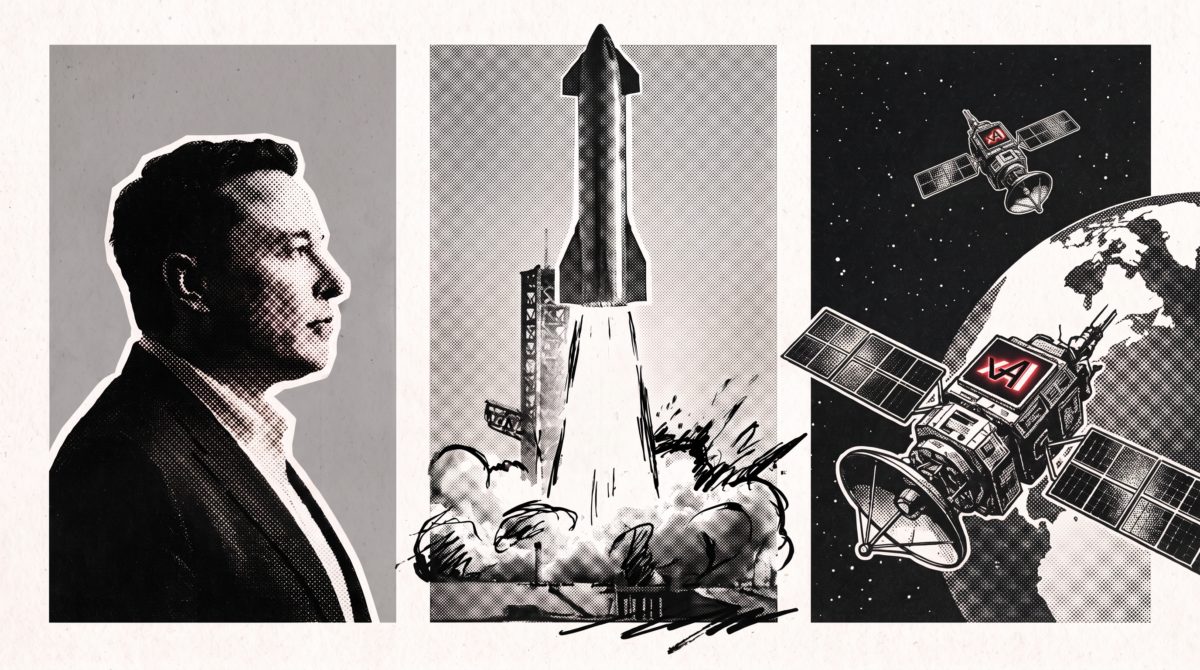
FCC clears SpaceX to deploy up to 1 million Starmind satellites for orbital AI data centers by 2040
The FCC has authorized SpaceX to deploy up to 1 million Starmind satellites for orbital data centers by 2040, with radio links approved as a backup if optical connections fail.
The Federal Communications Commission has authorized SpaceX to deploy up to 1 million Starmind satellites for orbital data centers, according to Reuters. The Starmind constellation of orbital compute modules is meant to cover part of the fast-growing demand for AI computing power on Earth. The agency also approved radio links that let SpaceX monitor and control the satellites if their optical connections fail.
A first satellite by 2033, the full constellation by 2040
SpaceX filed its application at the start of the year and pitched Starmind as a better alternative to ground-based data centers. Orbital data centers are “the most efficient way to meet the accelerating demand for AI computing power,” the company argued, because they use “solar power with little operating and maintenance costs.” Under the terms the FCC approved, SpaceX must put at least one authorized satellite into its assigned orbit by November 25, 2033. It must have 100,000 satellites in orbit by the same date in 2035, 500,000 three years after that, and all 1 million no later than November 25, 2040. The satellites go into orbital layers spanning 50 kilometers, at altitudes of up to 1,002 kilometers. Musk has said the company will start launching in 2027.
“Basic physical limits”
Critics doubt that space-based AI data centers can work at all. Adam Becker, an astrophysicist and a critic of Elon Musk’s space and AI ambitions, told AP that “it’s not going to happen.” Moving data centers off the planet is meant to spare the energy and water their ground-based counterparts consume, but space is a vacuum that traps heat inside objects and does not make cooling hardware easier. Heat has to leave the satellites by radiation, and Becker said there are “basic physical limits” to radiating that heat away for all of them. That many satellites could also cause in-orbit collisions and a huge amount of space junk.
What the FCC chairman says
FCC Chairman Brendan Carr says the approval leaves America “leading the world into the era of super intelligence” and opens a “bold new frontier.”
Sources: The Decoder · Engadget
SiTech — AI-powered web development
We build fast, modern websites and bring AI into real business workflows. Have a project or a question? We'd love to help.