GPT-6 Astra decodes a WWI German radio cipher that had resisted analysis
A Substack post credits the AI model GPT-6 Astra with reading a German ADFGVX message transmitted on Nov. 27, 1918, one of a dozen-plus WWI intercepts that stayed unsolved. Historians have yet to confirm the result.
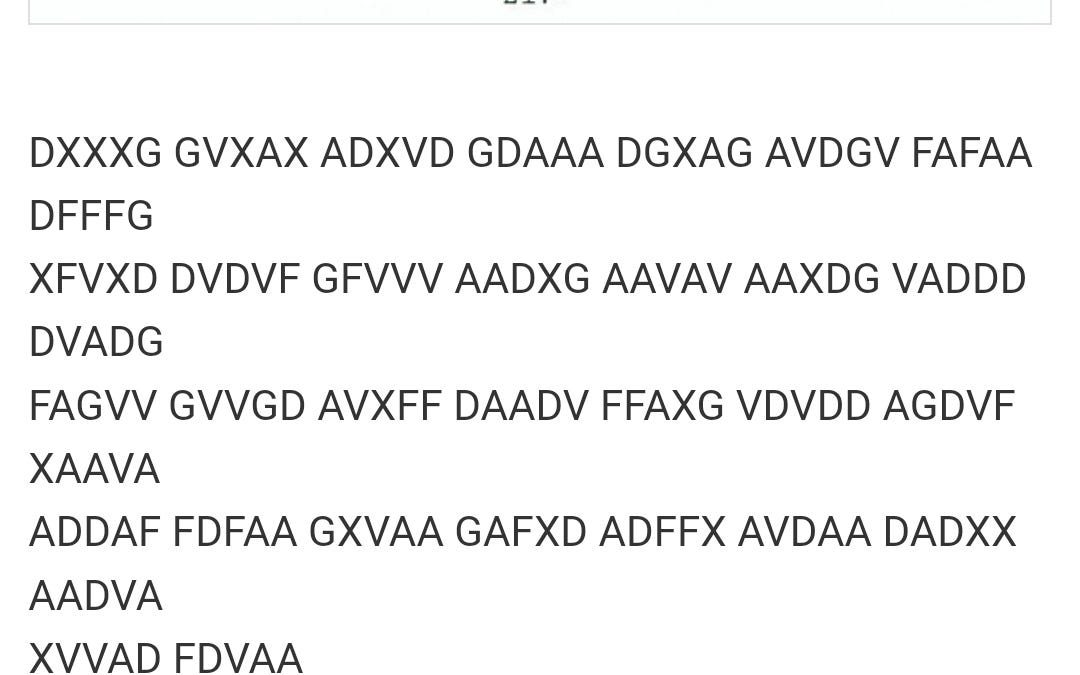
A German radio message sent on Nov. 27, 1918 — one of more than a dozen World War I intercepts that had resisted every attempt at decoding — has been read, at least according to a Substack post published on Sept. 17 that credits the AI model GPT-6 Astra with the work. The message belongs to a set of German military signals encrypted with the ADFGVX method, a cipher included in the list of 50 famous unsolved ciphers compiled by the German science blogging portal Scienceblogs.de.
The cipher that would not break
ADFGVX encodes letters and digits through a 6×6 grid whose headers and row labels are the six symbols A, D, F, G, V and X. Each cell of the grid maps to a two-symbol pair: with the key word "HOUSE", for example, AA stands for H, AD for O and DA for B, so the word "PRINZ" becomes FX GD DX FV VD. A different key word produces a completely different table.
German operators worked from a documented list of such key words, and hundreds of their messages have already been read, including by the codebreaking expert George Lasry. Some were not. The message in question, transmitted on Nov. 27, 1918 and reproduced on page 217 of the source material, was among the holdouts.
What Astra produced
According to the post, the model used "TRUPPENVERSCHIEBUNG" as the encryption word, taken from pages 214–215 of J. Rives Childs's "The History and Principles of German Military Ciphers, 1914–1918". Reading the message takes more than the table. The letters of the key word are first reordered alphabetically, then written out horizontally with the 170 cipher symbols laid beneath them in rows of 19 — eight full rows plus one row of 18, which yields 18 columns of nine symbols and a single column, under G, of eight. Since T is the 16th letter alphabetically, 14 nine-symbol columns and the eight-symbol G column precede it: 9×14 + 1×8 = 134, so T maps to the 135th symbol, an A. R has 107 symbols ahead of it, making the 108th symbol V. The pair AV returns E, the first letter of EIN.
The decoded text reads "EIN ENGLISCHER KREUZER EINLIEG X SEWASTOPOL X S4STEN X EIN GESCHWADER DER X ALLIIERTEN FOLGT 26STEN X", which the post renders in English as "AN ENGLISH CRUISER ARRIVED AT SEVASTOPOL ON THE ?4TH AN ALLIED SQUADRON FOLLOWS ON THE 26TH".
The historical check
Astra's explanation for why the message had gone unread is that "TRUPPENVERSCHIEBUNG" entered service as the key only on Dec. 9, 1918 — after the Nov. 27 transmission date, a discrepancy the post calls unexplained. To test the reading, the author checked the record and found that the British cruiser HMS Canterbury reached Sevastopol on Nov. 24, 1918 according to its original logs, and that an allied squadron did follow on Nov. 26.
The post presents the result as a minor illustration of the model's capabilities and states that its author is not aware of the message having been decoded before. The claimed solution has not been confirmed by historians or other cryptanalysts.
SiTech — AI-powered web development
We build fast, modern websites and bring AI into real business workflows. Have a project or a question? We'd love to help.