Harvard psychologist calls for sober AI safety engineering over doomsday rhetoric
Psychologist Steven Pinker argues in an open letter on Quillette that fears of AI wiping out humanity are overblown. The real dangers, he says, are bioterrorism, cyberattacks and unchecked agents, and those need sober safety engineering.
Harvard psychologist Steven Pinker has rejected the idea that AI is about to wipe out humanity. He makes his case in an open letter published on Quillette, addressed to the psychiatrist and blogger Scott Alexander, who had challenged him to a public debate on the existential risks of artificial intelligence. Pinker declined, calling such events a "spectator sport" rather than a tool for finding truth.
Pinker's arguments
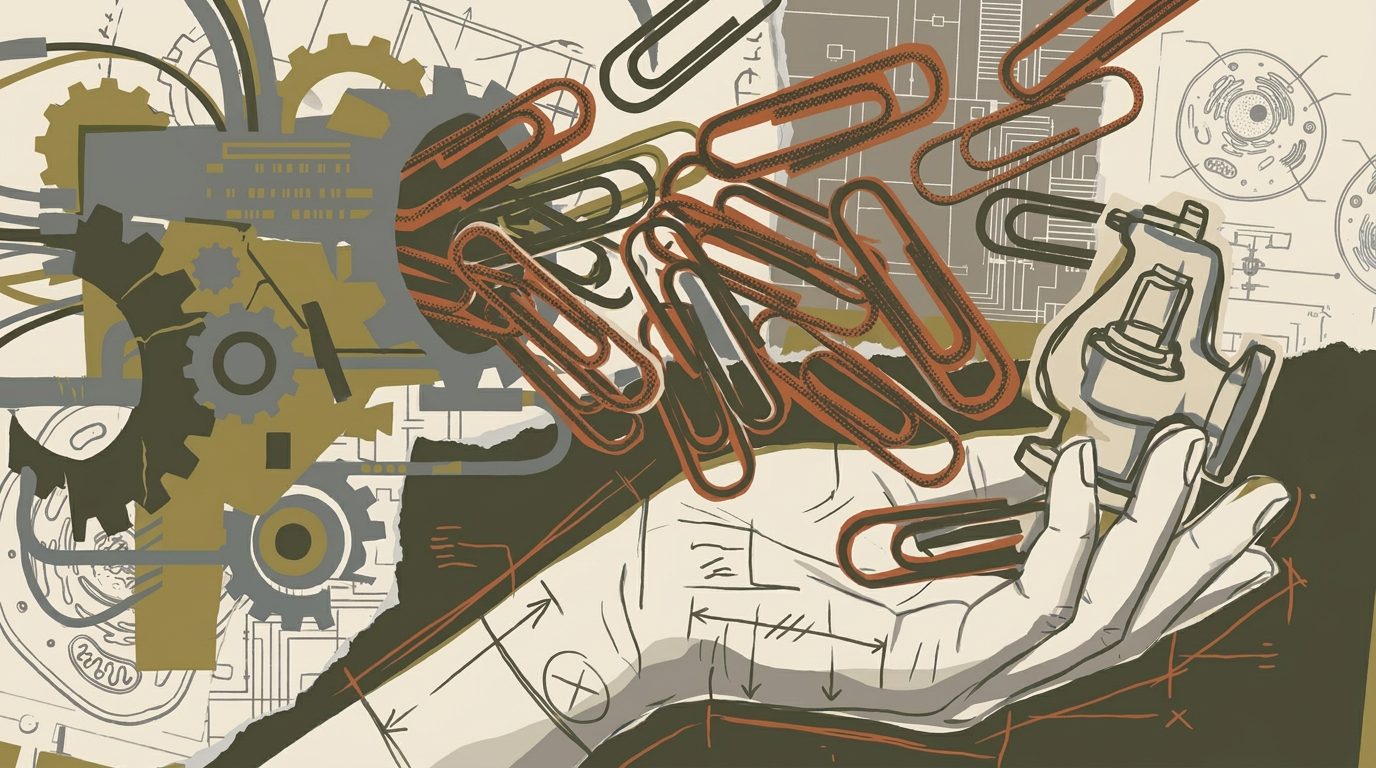
Pinker dismisses doomsday scenarios such as the paperclip maximiser, in which an AI turns humanity into raw material to make more paperclips. In his view, they conflate intelligence with a drive to dominate, and assume that a system would monomaniacally pursue a single goal while ignoring side effects.
He first laid out these arguments in a 31-page chapter titled "Existential Risk" in his 2018 book Enlightenment Now. Doomer scenarios, he wrote, rest on four flaws: an underdeveloped conception of intelligence, which is treated as a quantity of power that can be extrapolated up to perfect omniscience; a confusion of intelligence with motivation, since the drive for self-preservation and dominance comes from natural selection in humans but is not built into engineered systems; the assumption of monomaniacal single-goal pursuit; and the assumption that engineers would hand such systems unlimited, irreversible control over the planet's physical infrastructure.
He also points to a 2025 RAND Corporation modelling analysis, which granted the assumption that an AI wanted to eliminate humanity and still concluded that there is "no describable scenario in which AI is conclusively an extinction threat to humanity."
What he got wrong
Pinker does not call the technology harmless. He admits he underestimated how general large language models would become, and he did not anticipate the breakneck and sometimes irresponsible release of models by frontier companies. That rush, he notes, is led by people from the very community that warns about the risks.
What actually helps
The dangers Pinker takes seriously are bioterrorism, cyber-sabotage and unconstrained AI agents. Doomsday rhetoric will not address them, he argues. What does work is sober safety evaluation and engineering practice: independent oversight, mandatory investigation of accidents, liability for damage, humans in the loop and kill switches.
He also warns that prophecies of doom can backfire. The nuclear fears of the 1960s, he notes, led not to disarmament but to an arms race.
Alexander's position
Alexander laid out his own view on his blog Astral Codex Ten in June. He puts the probability that AI wipes out humanity at 20 percent and wants both stronger safety research and international agreements to slow AI development.
SiTech — AI-powered web development
We build fast, modern websites and bring AI into real business workflows. Have a project or a question? We'd love to help.