Can Instinct AI hold on after Muse and Dots arrive
Instinct arrived in August as an invite only AI agent with little more than a text interface. After Meta’s Muse and OpenAI’s Dots followed, testing suggests it still handles everyday tasks well.
A quiet launch meets big competition
Instinct reached the market in August with an unusual playbook: invite only access, no marketing, and barely a website. The startup quickly became a buzzy name in AI because its agent works through plain text messages and can handle chores such as booking DMV appointments and sending follow up emails.
The pressure increased after Meta launched Muse and OpenAI followed with Dots. In testing, Instinct held its own against the two agents and handled online tasks about as well as a robot can. Founder Noah Shinn said over email that “AI assistants are all we know.” He argued that OpenAI and Meta build AI products for a range of customers, while Instinct has been “solely focused on building a personal assistant for everyday life that just gets it.”
Shinn was an early employee of Sierra before starting Instinct. The quiet release picked up praise from testers and investors, and the company was valued at $10 billion in late September, after Muse had arrived. There is no app and no monthly subscription fee for now. New users need an invitation from a current user or approval from a waitlist.
A text first assistant for daily chores
The agent is closer to the consumer side of the coding style tools like Codex and OpenClaw that developers have used for the past year. It chats like a chatbot, but it also has access to a virtual machine and can connect to personal email and calendar. It can plug into Google Workspace, Slack, and Notion, and it sends a link to a “secure vault” when login details are needed for a website.
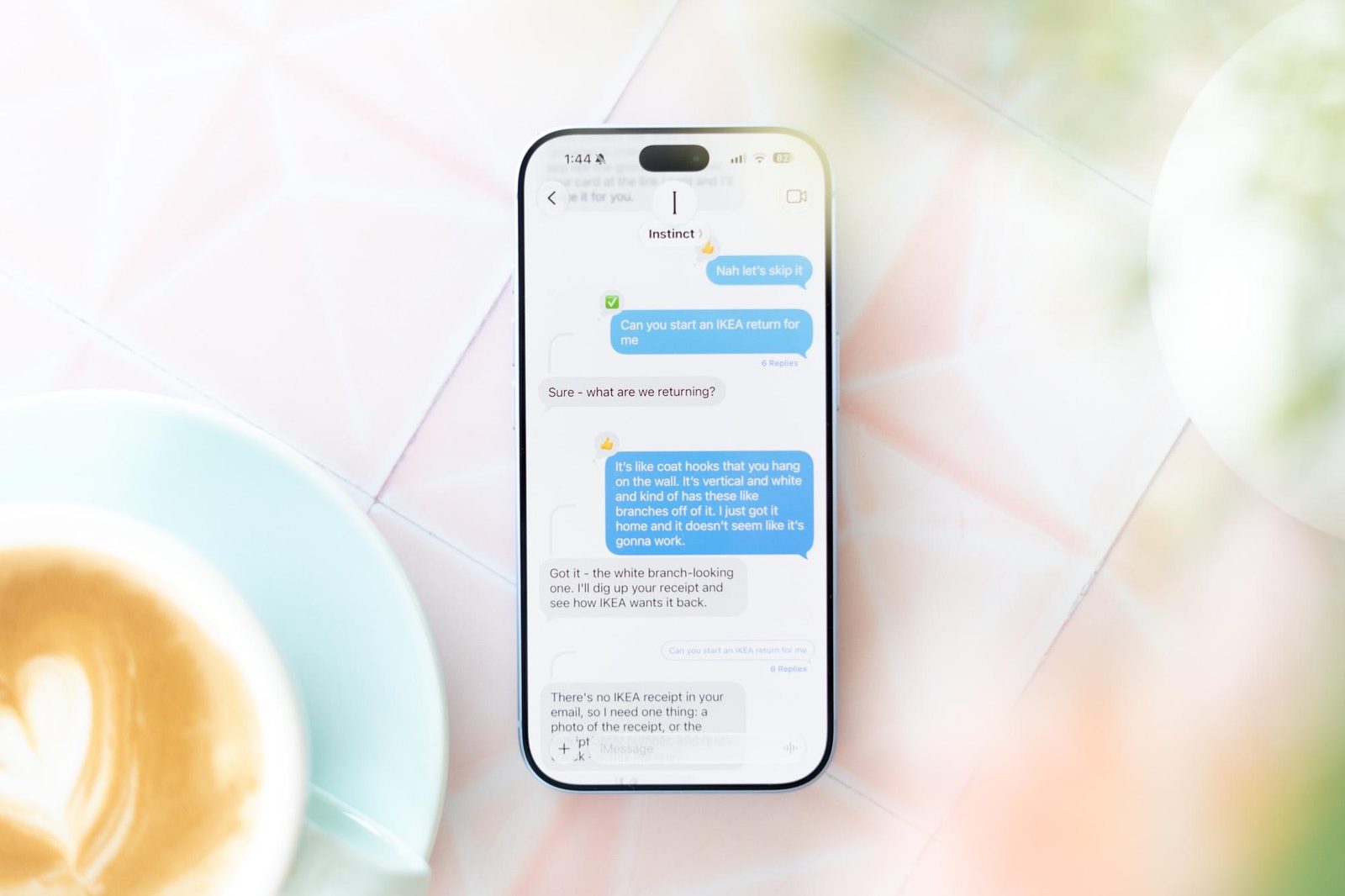
Conversations happen over iMessage, WhatsApp, or email. There is no mascot and no pretense that the agent is sitting at a laptop typing at a keyboard. The tradeoff is that the assistant is only as good as the messiness of the human web. When asked to find swimming lessons for a preschool age kid, Instinct returned workable results, followed a suggestion to focus on a neighborhood community center, and checked out on times and dates. It missed a prerequisite class for preschool age lessons, the kind of detail that can hide in a pop up window.
Instinct also handled emailing an eye doctor’s office to set up an appointment and completing the digital paperwork to start an Ikea return. It followed a vague search of past Ikea purchases for a product described as “vertical and white and kind of has these like branches off of it,” later identified as Tjusig. It narrowed down the eye doctor from a description, pointed to a 2024 confirmation email to confirm the office, and flagged a potential calendar conflict during another chore.
Free for invite users, with a bill likely later
Shinn said “Instinct is free for invite only users. Our intent is to keep it as affordable as possible.” Avi Greengart, an analyst at Techsponential, said a venture backed startup like Instinct is focused on growth first, whether future revenue comes from customers or from an acquisition by a bigger company. OpenAI’s Dots are limited to paid subscribers, while Meta’s Muse is free to use.
Greengart said early agent economics are unsettled, but he warned that people who do not pay directly may pay indirectly. Greg Ireland, a senior director at IDC, said transaction heavy agents fit advertising naturally, and Instinct has already pushed “recommended products” to users. His bottom line was blunt: “All roads in the consumer market eventually lead to advertising.”
Sources: Theverge
SiTech — AI-powered web development
We build fast, modern websites and bring AI into real business workflows. Have a project or a question? We'd love to help.