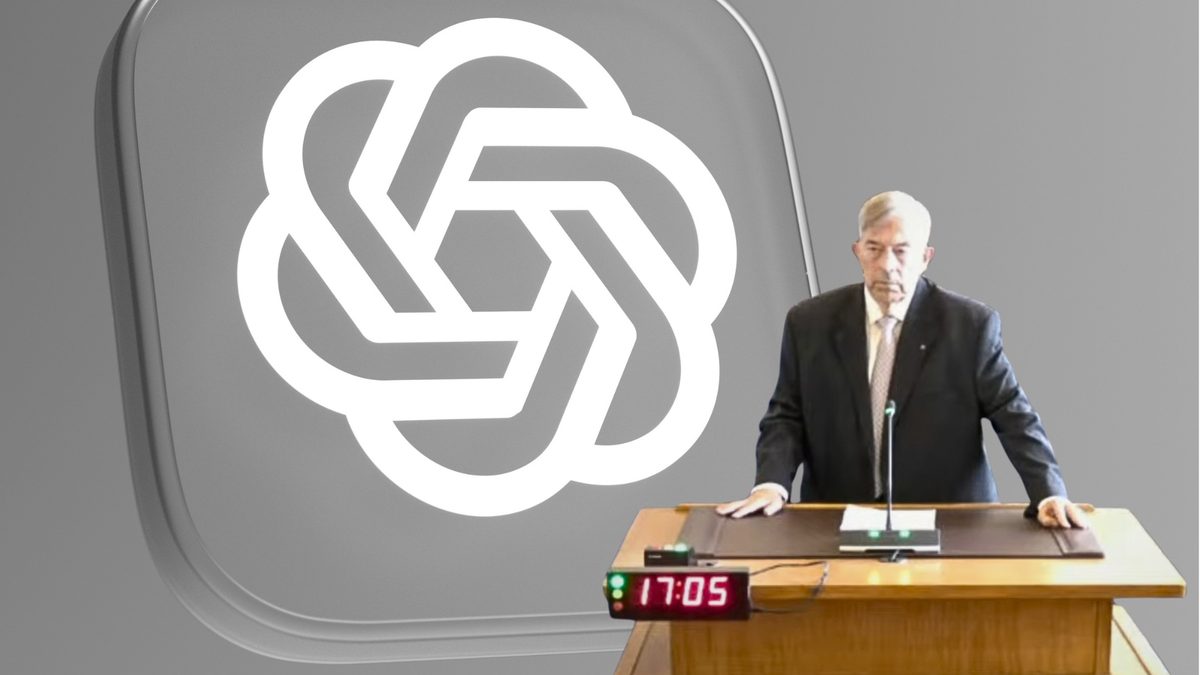
Lawyer Cites ChatGPT-Invented Fake Witnesses in Murder Appeal
A New Mexico attorney filed a murder appeal brief citing witnesses and testimony that ChatGPT had invented. The state Supreme Court found him in direct contempt, removed him from the case and fined him $5,000.
A New Mexico attorney has been found in direct contempt of court after filing a murder appeal brief that cited witnesses and testimony ChatGPT had invented. The state Supreme Court's order describes how Stephen D. Aarons, representing a man accused of shooting his wife, submitted filings built on "wholly fabricated witnesses" and testimony that was never given.
Aarons admitted the error at a hearing before five judges. "It's little comfort to know that my stupidity is what brings us together this afternoon," he said, according to 404 Media. He explained that he had assumed ChatGPT would produce a reliable summary of the proceedings.
Fabricated witnesses and testimony
The invented material included a nonexistent person named Danny Stanton who supposedly reported receiving threats, and another made-up figure, Linda Stanton, said to have described her husband being threatened. Other AI-generated passages touched on the shooter's clothing and appearance, the order states.
Aarons said he never told his client directly that the filing had come from a chatbot. In court he said he had spoken only with the man's family, telling them there was a problem with the brief. He described the client as hard to reach because the man speaks Spanish and is serving a life sentence; he was found guilty of killing his wife earlier this year.
Why he says he trusted the tool
Asked why he leaned on a chatbot for legal work, Aarons said he had heard of doctors using AI for medical research. Reuters, which covered the case in September, quoted him saying: "I am remorseful but hopeful that the disciplinary board takes into account it was an honest mistake." He added that it was a lesson learned for all professionals who rely on a technology he called powerful but sometimes unstable.
The judges were unconvinced. One asked: "Do you watch the news? Do you listen to the radio? Do you read anything about what's going on in the world?" He then noted that the problem of lawyers relying on AI hallucinations is an above-the-fold story every single day, and said that both deliberate ignorance and taking a gamble were inconsistent with the code of conduct.
Sanctions and a wider pattern
The court referred Aarons to the Disciplinary Board, barred him from appearing before it while the investigation runs, removed him from the case and appointed a public defender for his former client. He was also sanctioned $5,000, payable to the State Bar of New Mexico Client Protection Fund.
His case is the latest in a run of sanctions over AI-generated filings. In May, judges of the New York Supreme Court's Appellate Division criticised several lawyers for more than 20 minutes over their use of AI, calling their failures "striking, concerning, disappointing, and saddening." Court reporters, too, have been caught submitting AI-generated transcripts containing errors.
SiTech — AI-powered web development
We build fast, modern websites and bring AI into real business workflows. Have a project or a question? We'd love to help.