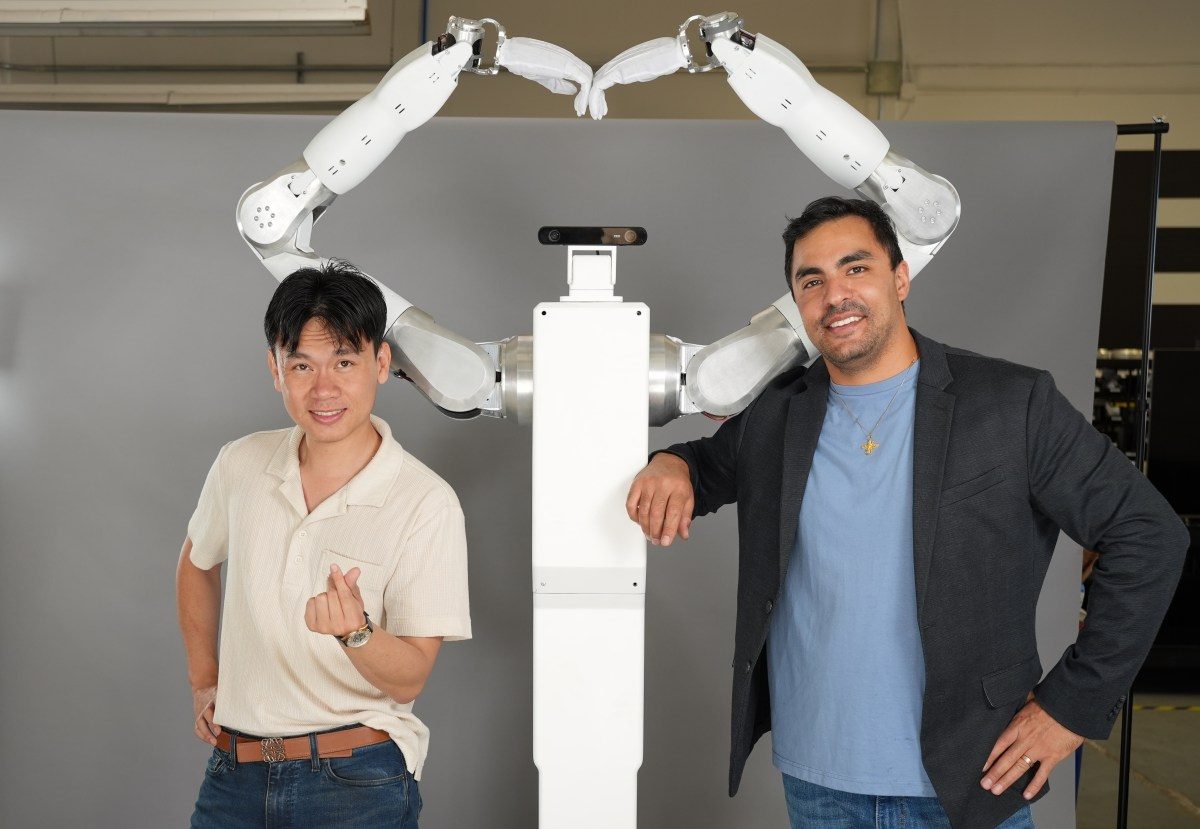
Feather Robotics wants to be the "Android of robotics" for developers
Feather Robotics raised a $7.6 million pre-seed led by Gradient Ventures and already sells a $30,000 modular humanoid that restaurants and science labs put to work; revenue has passed $1 million.
Feather Robotics, a humanoid startup founded in 2025, is building what its founders call the Android of robotics: a hardware and software toolkit that lets developers deploy robots now rather than wait for a general-purpose machine.
Robotics founders and investors agree the "ChatGPT moment" for robots, when a machine adapts to any environment, has not arrived; they differ only on whether it is a year or a decade away. Feather's answer is a modular robot developers can program today.
A robot developers can build on
Feather's system is modular, so developers can change the hardware for different use cases, for example by adjusting arm lengths. The robots already work as cooks in restaurants and clean up science labs, though the startup is not disclosing its customers. Revenue has passed $1 million, and the company says it is preparing a major product launch after a year of field testing.
The hardware can also run models from any leading robotics AI provider, including Nvidia, Skild and Physical Intelligence.
Founders and funding
Feather was founded in 2025 by Hoa Mai, whose previous humanoid startup was sold to 1X, and Parsa Bakhtiari, a former Tesla Model 3 engineer who at one point reported directly to Elon Musk. Gradient Ventures backed the company at inception and led its $7.6 million pre-seed round.
"You can't buy a Tesla robot today and develop on top of it," Mai told TechCrunch. "Hardware players like Nvidia or Apple started with a product that worked, then added complexity over time."
Price and competition
The robot costs $30,000, about half the price of Unitree's H2 Edu. Mai acknowledges Feather took a page from Chinese robotics companies such as Unitree; with new foreign models restricted from the US market, he says it is now a homegrown option of its kind.
Darian Shirazi, a general partner at Gradient, says Feather has no direct competitors in the US: Sunday builds household robots, Figure and Tesla chase general-purpose machines, and Feather is, in his words, the only US startup developing a modular humanoid platform. His argument for scale: a laborer costs $50,000 to $60,000 a year before training and HR support. "You can now buy a Feather robot to do that," he said.
An ecosystem bet
According to Shirazi, Feather has spent only a fraction of its pre-seed funding; its bet is that value in robotics will come from the ecosystem around the hardware. "If we think about the market size today for physical AI companies, it's very small," Mai said. "But if you think about how many physical AI application companies will probably exist in five years, we expect it to be in the thousands." Feather hopes to be the platform that powers them.
SiTech — AI-powered web development
We build fast, modern websites and bring AI into real business workflows. Have a project or a question? We'd love to help.