NVIDIA Opens Vera Rubin Architecture and AI Factory Standards at OCP Summit
At the OCP Global Summit, NVIDIA contributed Vera Rubin rack designs to the open MGX architecture, published data center specifications with hyperscalers, and launched new DSX open source software components.
Vera Rubin Designs Contributed to Open MGX Architecture
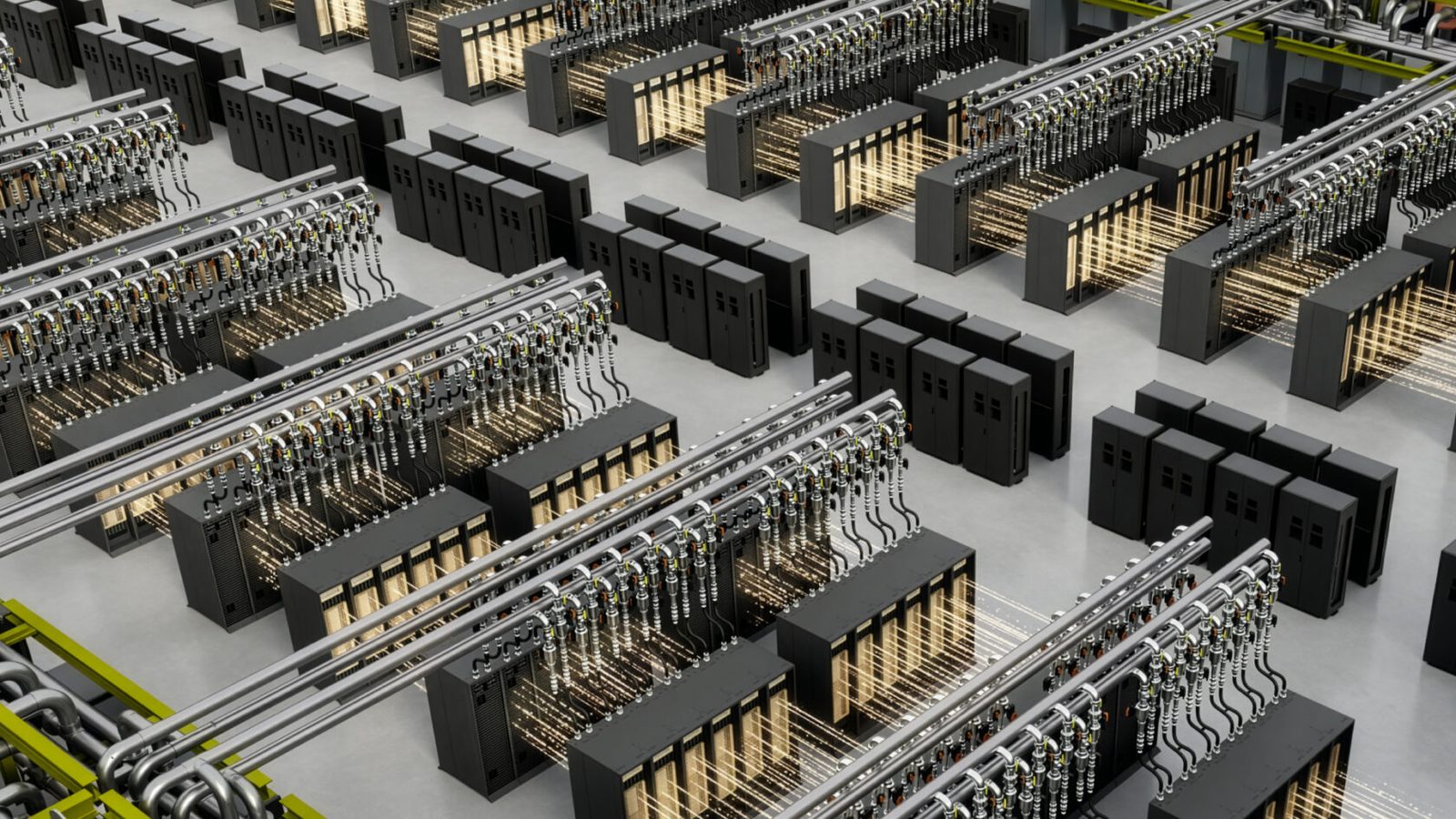
NVIDIA contributed key Vera Rubin rack and compute tray designs to OCP through the open NVIDIA MGX architecture, giving system builders a common foundation for developing next-generation AI factory infrastructure. The company also joined industry leaders in contributing to the third-generation MGX AI data center reference design through OCP's Open DC Initiative, combined with open liquid-cooling technologies such as MQD and MQDB.
The updated MGX 1.2 specification extends the open architecture with rack-scale blind-mate liquid cooling, interoperable rack-scale interconnect infrastructure and a liquid-cooled 5,000A busbar designed for higher-power AI systems. It adds native 19-inch equipment support, higher-density rack designs, configurable I/O bays and fanless liquid-cooled compute trays. The architecture supports rack deployments up to 250kW while simplifying serviceability, deployment and infrastructure reuse.
NVIDIA also published the Vera CPU rack design specification, extending MGX beyond accelerated computing with a purpose-built platform for the agentic AI era. While Vera Rubin NVL72 serves as the foundation for large-scale training and inference, the Vera CPU rack is designed to support tool calling, orchestration and sandboxed execution for AI agents.
Open Standards and DSX Software Components
NVIDIA joined AMD, Google and Meta to publish the Open Data Center Specification v0.7, a unified blueprint for next-generation AI factory facility design covering power architecture, cooling infrastructure and physical layout. Separately, Google, Meta, Microsoft and NVIDIA published the OCP Grid Resilience Specification, which establishes how large-scale AI infrastructure should behave during utility grid disturbances, including restoring to near-full load within less than two seconds.
NVIDIA also expanded the open source components of DSX OS, the operating layer of its DSX AI factory platform. The new tools include NVIDIA Config Manager for automating switch configurations, the NVIDIA Cluster Readiness Engine for stress-testing GPU clusters before training, the NVIDIA Rack Management Service for rack-level firmware management and a Cluster API Provider for accelerating bare-metal deployment. The components were developed from NVIDIA's experience running DGX Cloud.
Partner Advances in Power, Networking and Optics
Meta announced adoption of NVIDIA Spectrum-6 102.4Tb/s Ethernet switches, including its N-IceCube switch that slots into Meta's liquid-cooled IcePack rack and runs the open source FBOSS operating system. Spectrum-X Multiplane technology, enabled by Spectrum-6 switches and ConnectX-9 SuperNICs, distributes GPU traffic across up to eight independent network planes, supporting AI factories of more than 100,000 GPUs.
Visionbay unveiled K-1, an 800 VDC AI factory platform built around NVIDIA's 800 VDC reference architecture with power and thermal technologies from Vertiv, designed for future Vera Rubin deployments. NVIDIA and Cisco announced the Ultra-Dense Small Form Factor Pluggable standard, described as the industry's first module for 400Gb/s-based networking fabrics, with plans to advance it through a community-led effort with TE Connectivity and Amphenol. NVIDIA and Google also announced Falcon Transport support on future ConnectX-10 SuperNICs and BlueField DPUs to improve Ethernet efficiency for large-scale AI infrastructure.
Sources: Nvidia
SiTech — AI-powered web development
We build fast, modern websites and bring AI into real business workflows. Have a project or a question? We'd love to help.