Scientists Find Evidence of Second-Generation Planet Orbiting White Dwarf
Astronomers analyzing 1999 Hubble data of white dwarf HS 0209+0832 have matched 100 unidentified chemical features to niobium, an element forged only in dying stars, pointing to a rare second-generation planet.
Decades-Old Hubble Data Reinterpreted
In 1999, NASA's Hubble Space Telescope observed a white dwarf star codenamed HS 0209+0832 and recorded 100 chemical features that astronomers could not identify at the time. A team of scientists led by astronomers from the University of Warwick has now published a paper in Nature showing that those features match the element niobium, which can only be synthesized in the exotic conditions that briefly emerge inside dying stars.
A Planet Forged From a Dying Star
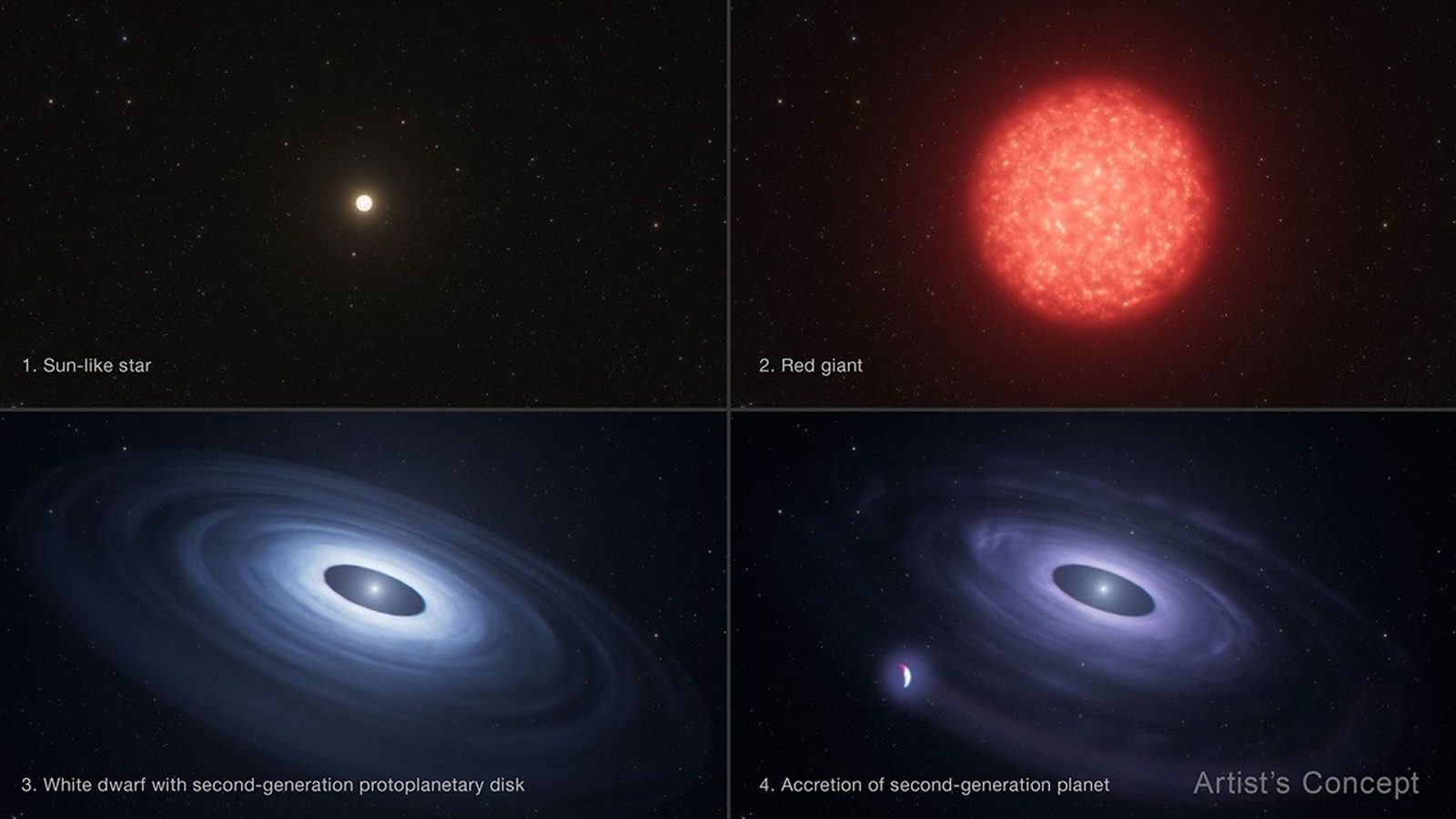
A white dwarf is the dense core left behind after a star like our Sun exhausts its hydrogen, expands into a red giant, and sheds its outer layers. Planets in our solar system, including Earth, are first-generation worlds formed from the material present at the Sun's birth. Second-generation planets, by contrast, form from the material a dying star casts off. They are extremely rare and have mostly been suspected around pulsars, the highly magnetic, rapidly spinning remnants of dead neutron stars. White dwarfs are far more common than pulsars, and study lead author Jamie Williams said finding a second-generation planet around one "was completely unexpected."
Niobium Levels and a Long-Term Orbit
Williams reached the conclusion by comparing Hubble's decades-old observations with an updated chemical database. The niobium levels in the HS 0209+0832 system are 1,000 times higher than those in our Sun, an amount the team says points to a planet formed from the dying star's ejected material. The white dwarf remains extremely hot and is still blasting the planet with enough heat to strip away its outer layers, but the researchers believe the planet will survive and remain in the white dwarf's habitable zone for millions of years. The study was funded by the European Research Council, which said HS 0209+0832 would be the first white dwarf found to host a second-generation planet if the findings are confirmed.
Sources: Engadget
SiTech — AI-powered web development
We build fast, modern websites and bring AI into real business workflows. Have a project or a question? We'd love to help.