Scuba launches context engine for teams and AI agents with $34 million in funding
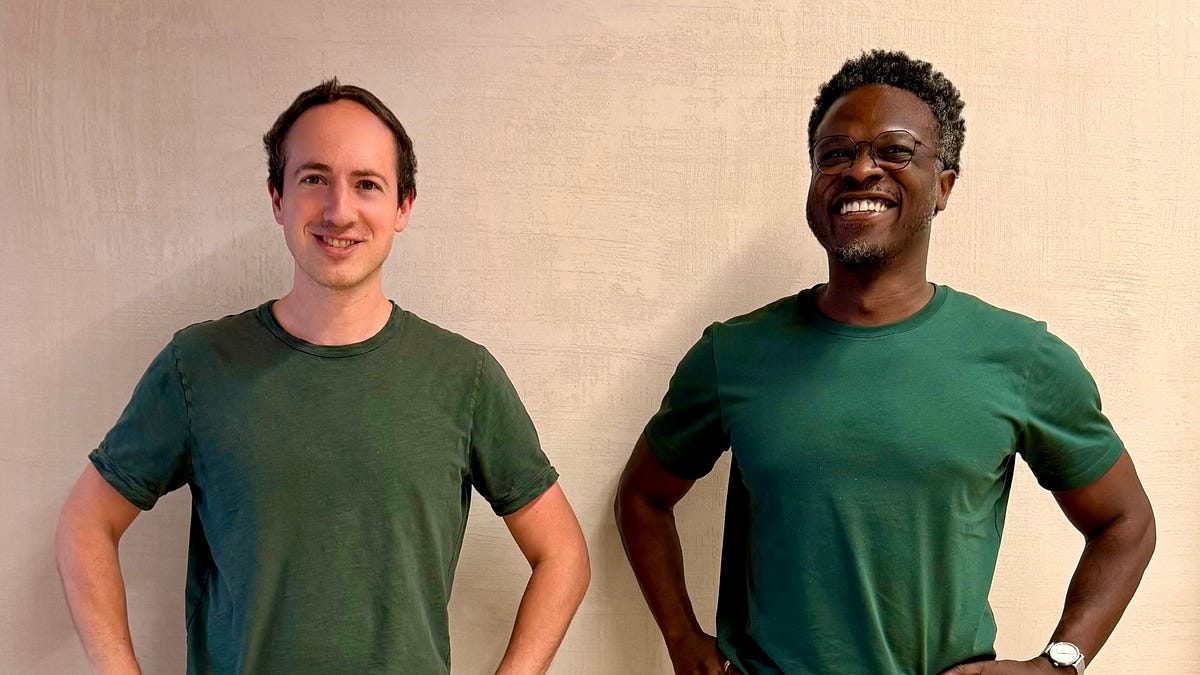
Noah Desai Weiss and Dolapo Falola are launching Scuba, a New York startup that wants to give workers and AI agents a shared memory of company taste, judgment and strategy through Captures and Collections.
Scuba launches with Slack era backing
Noah Desai Weiss and Dolapo Falola are launching Scuba, a New York based startup building what it calls a context engine for human workers and AI agents. Desai Weiss, Scuba's CEO, says the product is meant to feel like the shared memory a team has been missing, keeping people and the agents that work for them aligned on what they are building toward.
The founders first worked together at Foursquare in 2011 and later collaborated at Slack, where Desai Weiss was chief product officer and Falola was an engineering leader. Falola subsequently led engineering at The Browser Company. Four of Scuba's first hires came from their Slack team.
Scuba has raised $34 million across two funding rounds, a pre seed round led by Accel and a seed round co led by Accel and IVP. Individual backers include Slack co founders Stewart Butterfield and Cal Henderson, Stripe CEO Patrick Collison, Instagram co founder Mike Krieger, LinkedIn co founder Reid Hoffman, former LinkedIn CEO Jeff Weiner, Dropbox co founder Drew Houston, Salesforce co founder Parker Harris, Vanta's Christina Cacioppo, Harvey's Winston Weinberg and Abridge's Shiv Rao.
Captures and Collections target messy shared context
Desai Weiss argues that AI assistants, coding agents and models can make individuals faster, yet teams still struggle with the question of what they are racing toward. Falola says shared context is often messier than expected, including screenshots, PDFs, webpages and ad hoc conversations.
For six months, hundreds of smaller teams have used Scuba to take Captures of articles, videos, web pages and tweets, then organize them in Collections that can be summarized and searched. Users can reach that material in ChatGPT, Claude or Slack through Scuba's MCP connectors, and save generated documents such as evaluations or QA test runs back into Scuba.
The company previously used the name Flashback. Scuba's founders say the product is not another AI assistant, document directory, meetings tracker, digital coworker, answers engine or communication tool. They position it as a way to capture collective taste, judgment and hard fought lessons learned so models get the context they need. Desai Weiss says launching a year earlier would have been too early because the hard part is not model intelligence, it is giving models the right context.
Early backers see a daily knowledge base for AI coding work
Accel partner Andrew Braccia, who led investments in both Slack and Scuba, says he uses Scuba for healthcare projects with people outside Accel and relies on summaries to replace PDFs or copy pasted ChatGPT blurbs. He expects daily value inside companies as a two way knowledge base for teams working with AI coding tools from Anthropic, OpenAI, Cognition, Cursor, Factory and others.
Former Slack product leader Matt Wahl, who now invests in and advises startups, said in late September that he had made no fewer than 336 Captures in a month. He shares some material in a Thought Fodder Collection with about ten founders and often sends notes to Claude to organize voice notes, screenshots and past notes into investor memos. He also invested in Scuba's new round.
Scuba remains in limited access with a waitlist on Mac, iPhone, Windows and browser extensions. The team has 10 people and many years of runway. Desai Weiss says the additional round was opportunistic and will help keep the full feature set open to early users while the company studies pricing. He says the models under Scuba are not cheap and the cost of running the service is meaningful again.
Sources: Upstarts Media
SiTech — AI-powered web development
We build fast, modern websites and bring AI into real business workflows. Have a project or a question? We'd love to help.