Shield AI, Waabi and General Motors on Building AI Where Failure Is Not an Option
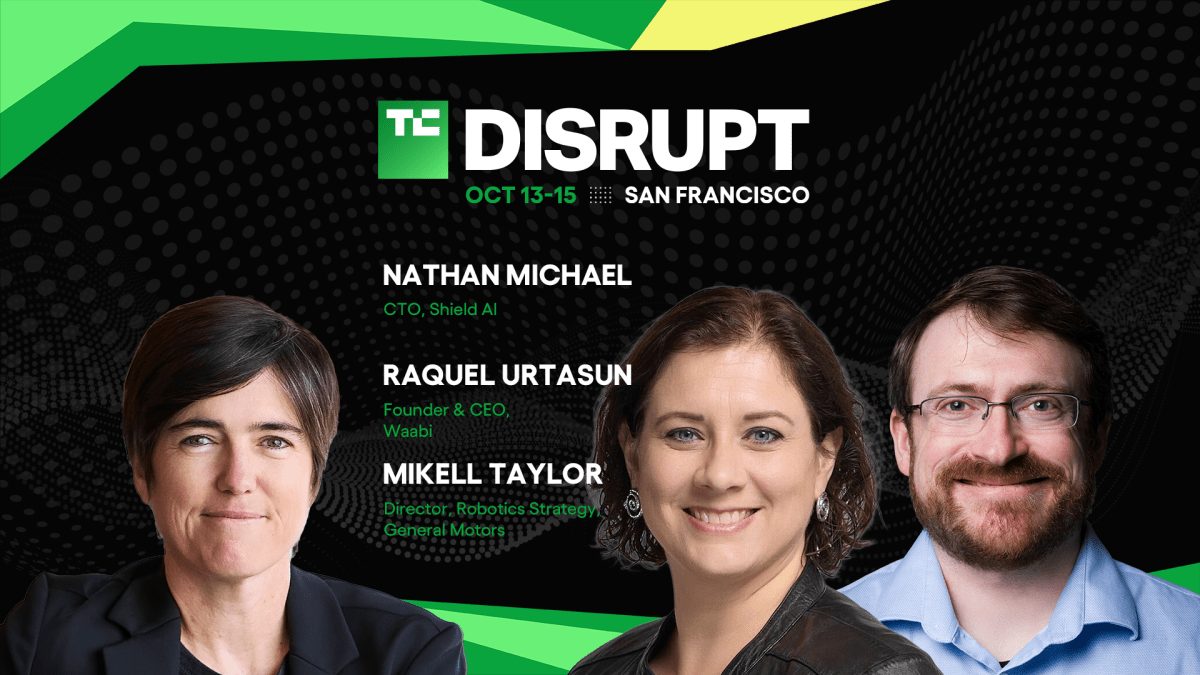
At TechCrunch Disrupt 2026, Shield AI CTO Nathan Michael, Waabi founder Raquel Urtasun and General Motors' Mikell Taylor will explain how autonomous systems are tested, validated and trusted before they leave the lab.
A chatbot can give a bad answer. An AI system flying an aircraft, driving a vehicle or controlling a robot can cause a crash or compromise a mission. At TechCrunch Disrupt 2026, three builders of such systems will explain how a team knows an autonomous system is ready to leave the lab.
One session, three high-stakes domains
The panel, titled “Building AI Systems When Failure Is Not an Option,” takes place on the Real World AI Stage. It brings together Shield AI chief technology officer Nathan Michael, Waabi founder and CEO Raquel Urtasun and Mikell Taylor, director of robotics strategy at General Motors. The conversation covers what deployment demands: a safety culture, testing and validation, regulatory hurdles and earning trust.
Shield AI: autonomy for demanding missions
Nathan Michael leads the development and deployment of Hivemind, Shield AI's platform-agnostic mission autonomy software. His background spans AI, control, perception and multi-robot systems, including years at Carnegie Mellon University's Robotics Institute. In February, Hivemind was selected as an autonomy provider for the U.S. Air Force's Collaborative Combat Aircraft drone prototype program. A month later, Shield AI announced $1.5 billion in Series G funding at a $12.7 billion post-money valuation.
Waabi: validation before driverless deployment
Raquel Urtasun has spent 25 years working on AI and autonomous vehicles. Before founding Waabi she was chief scientist and head of R&D at Uber ATG; she is also a computer science professor at the University of Toronto and co-founded the Vector Institute for AI. In January, Waabi raised $1 billion and announced a partnership with Uber to support the deployment of 25,000 or more Waabi Driver-powered robotaxis. The company's Waabi World simulator trains, tests and stress-tests the Waabi Driver in a virtual environment, and Urtasun has said its autonomous trucks still need to be fully validated before driverless deployment.
General Motors: robots that work alongside people
Mikell Taylor has spent more than two decades building robots designed to do useful work, and now leads robotics strategy for General Motors' Autonomous Robotics Center. Previously she led the Amazon Robotics team that developed Proteus, Amazon's first autonomous mobile robot. Her career began with a robotic senior prom date and now focuses on machines that are practical, reliable and safe around people. Her argument: user experience and adoption belong in product design and deployment planning from the start.
The session is one of more than 200 across six industry stages at Disrupt, which runs October 13-15 at Moscone West in San Francisco. More than 10,000 founders, investors, operators and tech leaders are expected, along with 250+ speakers and 300+ exhibiting startups.
SiTech — AI-powered web development
We build fast, modern websites and bring AI into real business workflows. Have a project or a question? We'd love to help.