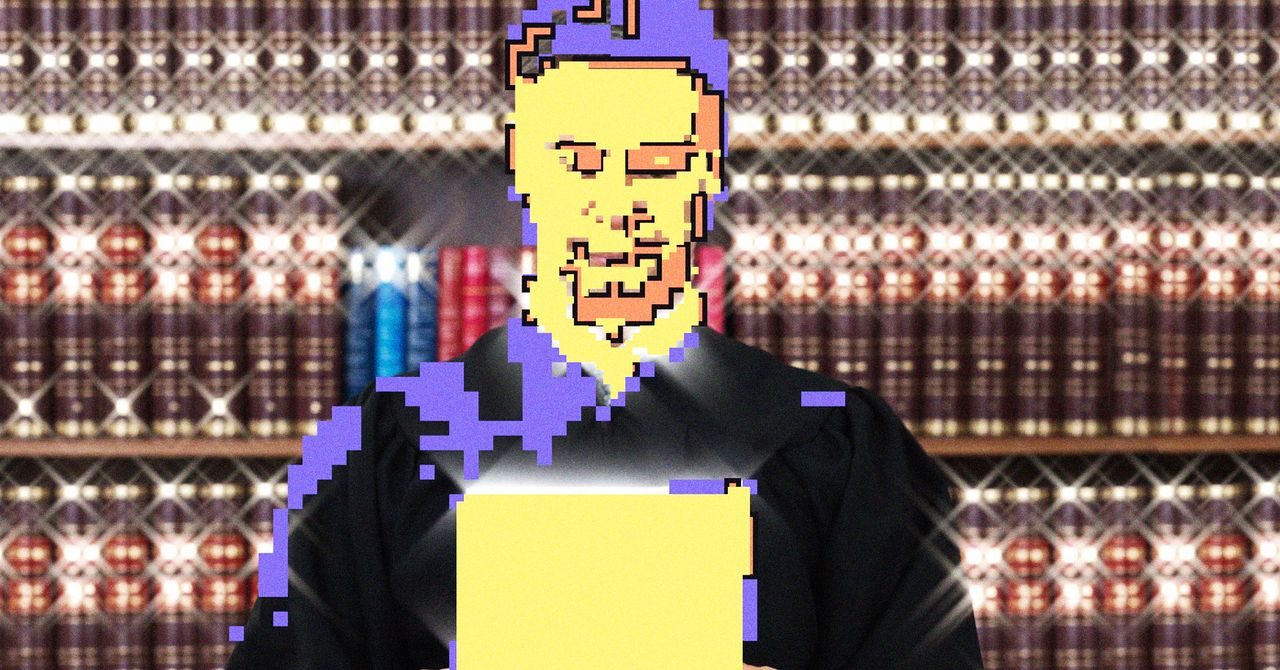
Retiring Judge Geoffrey Vos Says AI Could Decide Simpler Civil Cases
Master of the Rolls Geoffrey Vos, nearing retirement, says AI could one day adjudicate simpler civil disputes such as personal injury claims, while complex commercial and sensitive family cases may still need human judges.
Geoffrey Vos, who is nearing retirement as Master of the Rolls, England's most senior civil justice figure, says artificial intelligence could eventually help decide some simpler civil disputes. He told WIRED that AI could make resolution faster and cheaper, while complicated commercial cases and sensitive family matters may still require human judges. Vos also warned that courts must manage risks such as fabricated evidence and a surge of AI-assisted claims.
How Vos uses AI
Vos said he does not use AI to write judgments, but uses Microsoft Copilot to find documents, navigate large amounts of material, and check information. He said it saves time, and that he can locate a document created years ago in seconds during a schedule of 11 meetings a day. He also said lawyers should adopt change cautiously, with their eyes open, while recognizing that the legal system must stay on the same technological wavelength as the public it serves.
AI is already changing courts
Vos said AI is changing the courts remarkably quickly, citing a 10 percent rise in county court cases started each year and saying that figure may increase. He said people now put legal problems into Gemini, ChatGPT, or Claude, which can help create particulars of claim, cases, and claim forms. He argued that a claim created by AI is not necessarily frivolous, and that greater use of such tools can reflect broader access to justice, although some claims may be bogus. He said courts also face fabricated evidence, including images, video, and voice recordings, but judges already decide whether evidence is false, as they have with forged wills and other fabricated material.
Where the line could be drawn
After visiting a court in Shenzhen, China, where civil disputes are already decided by judges with heavy AI assistance, Vos said courts across the globe should consider following that path. He said personal injury claims, low-value professional negligence cases, and similar disputes could easily be adjudicated by AI, while custody and family cases and complex commercial cases may still need human judgment. He said algorithmic decision-making would require consent in a particular case or a decision by society through legislation, and that people may find it harder to accept an adverse machine-driven decision than a human one. He added that AI can produce very plausible reasoning, even though how it reached it is not visible, but human judges remain important because people want to be judged by fellow humans, though some litigants may prefer a quick outcome even if it is not human.
Sources: Wired
SiTech — AI-powered web development
We build fast, modern websites and bring AI into real business workflows. Have a project or a question? We'd love to help.