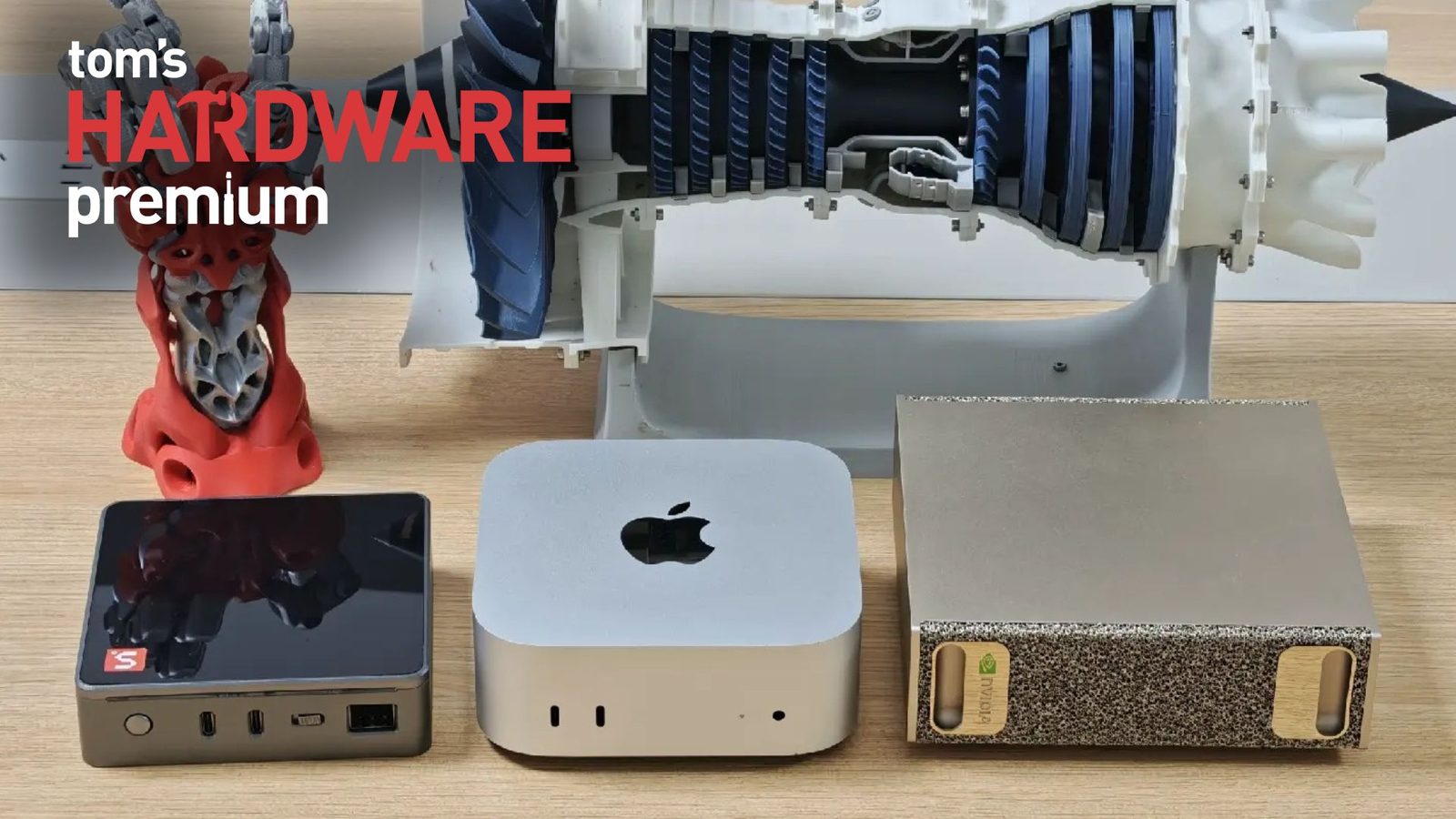
Sipeed MaixStation targets DGX Spark and Ryzen AI Halo with Axera AX8860P
Sipeed's MaixStation uses Axera's AX8860P, a 6nm 16-core Arm Cortex-A55 chip with a 256 TOPS FP4 NPU. The 128GB model pairs LPDDR5X at 273 GB/s and is expected at about $3,999.
MaixStation hardware
Sipeed has introduced the MaixStation as a Chinese made rival to Nvidia's DGX Spark and AMD's Ryzen AI Halo class systems. It is built around Axera's AX8860P, a 6nm chip with 16 Arm Cortex-A55 cores and an in-house NPU rated at 256 TOPS in native FP4 with no sparsity.
The 128GB model uses LPDDR5X on a 256-bit bus at 273 GB/s, matching the DGX Spark and the 192GB Ryzen AI Max+ PRO 495 on bandwidth. Sipeed also lists a MaixStation Pro with 512GB. The box measures about 11 by 11 by 3 cm, draws about 40W in typical use, and can be powered over USB-C. Ports include 10G SFP+, USB-C, an M.2 2280 slot for a PCIe 5.0 SSD, and an MCIO 8i connector for linking another unit.
Performance and node linking
Sipeed claims the MaixStation is 25% faster in prefill and 30% faster in decode than the DGX Spark when running a 27B Qwen model. In an email to Tom's Hardware Premium, the company put the lead at about 10% for both prefill and decode with FP4 on each machine and speculative decoding off, and said newer runs with a wider lead are not official yet.
The company argued that the Spark's 1 PFLOP FP4 figure relies on sparsity and called the 1000 TOPS claim fake sparse. Nvidia's dense figure is about 500 TFLOPS, still roughly double the AX8860P's 256 TOPS. For linking, Sipeed says the MaixStation uses a 256 Gbps chip to chip connection, rising to 384 Gbps, and supports up to eight nodes without an extra switch in single, dual, quad, and PCIe card configurations. Nvidia's datasheet says linking four Sparks requires an external switch.
Software, price and availability
The MaixStation ships with Debian 13 and Linux 6.18. Sipeed claims support for vLLM, SGLang, and PyTorch, while Axera adds ONNX, Hugging Face model formats, and an OpenAI compatible API. The end of October release is AXDSL, a kernel programming language, plus Pulsar2 source code; Sipeed says SGLang and vLLM run on a custom backend built on it and that Hugging Face models run without a conversion step.
Sipeed expects the 128GB model to cost about $3,999, with launch discounts on Kickstarter. That would put it level with the 128GB Ryzen AI Halo and below the DGX Spark at $6,950. Sign-ups are open ahead of a Kickstarter campaign at the end of the year, with units expected to ship within three months after it closes. Sipeed says it used current DRAM prices rather than stock bought last year, and noted that buyers can supply their own standard M.2 2280 SSD.
Sources: Tom's Hardware
SiTech — AI-powered web development
We build fast, modern websites and bring AI into real business workflows. Have a project or a question? We'd love to help.