Nine Nations Sign San Francisco Declaration to Defend AI Supply Chains
Nine countries signed the San Francisco Declaration under Pax Silica to jointly protect AI related technologies and supply chains, with Germany, Sweden, the Netherlands and the European Commission expected to join next week.
Nine countries, including the United States, South Korea and Japan, signed the San Francisco Declaration to jointly protect critical AI technologies and supply chains. The pact is part of Pax Silica, a US led initiative to build resilient AI supply chains across semiconductors, critical minerals and energy. Germany, Sweden, the Netherlands and the European Commission are expected to join next week.
Shared responsibility for AI supply chains
The nine signatories are the United States, South Korea, Japan, Australia, Israel, the United Kingdom, India, Qatar and the United Arab Emirates. The Financial Times reported Sunday that they committed to jointly identify AI related critical technologies and supply chains in need of protection. Jacob Helberg, the US under secretary of state for economic affairs, told the FT that "the know-how to design chips, the machines to make chips, and the ports to ship chips can all be in different countries," adding that "the reason the San Francisco Declaration is historic is that Pax Silica partners have agreed to treat the security of these technologies and infrastructure as a shared responsibility." Participating countries agreed to jointly identify sensitive AI related technologies and critical infrastructure requiring protection on national security grounds, and to expand information sharing on areas where supply chain diversification is needed. They will particularly strengthen safeguards for advanced technologies whose theft or illicit transfer could give a rival a significant advantage in military and intelligence domains. The declaration states that "economic security is the foundation of national security" and that "no country can be safe without protecting its core systems and technologies from those who seek to undermine them."
Rare earths and summit pressure
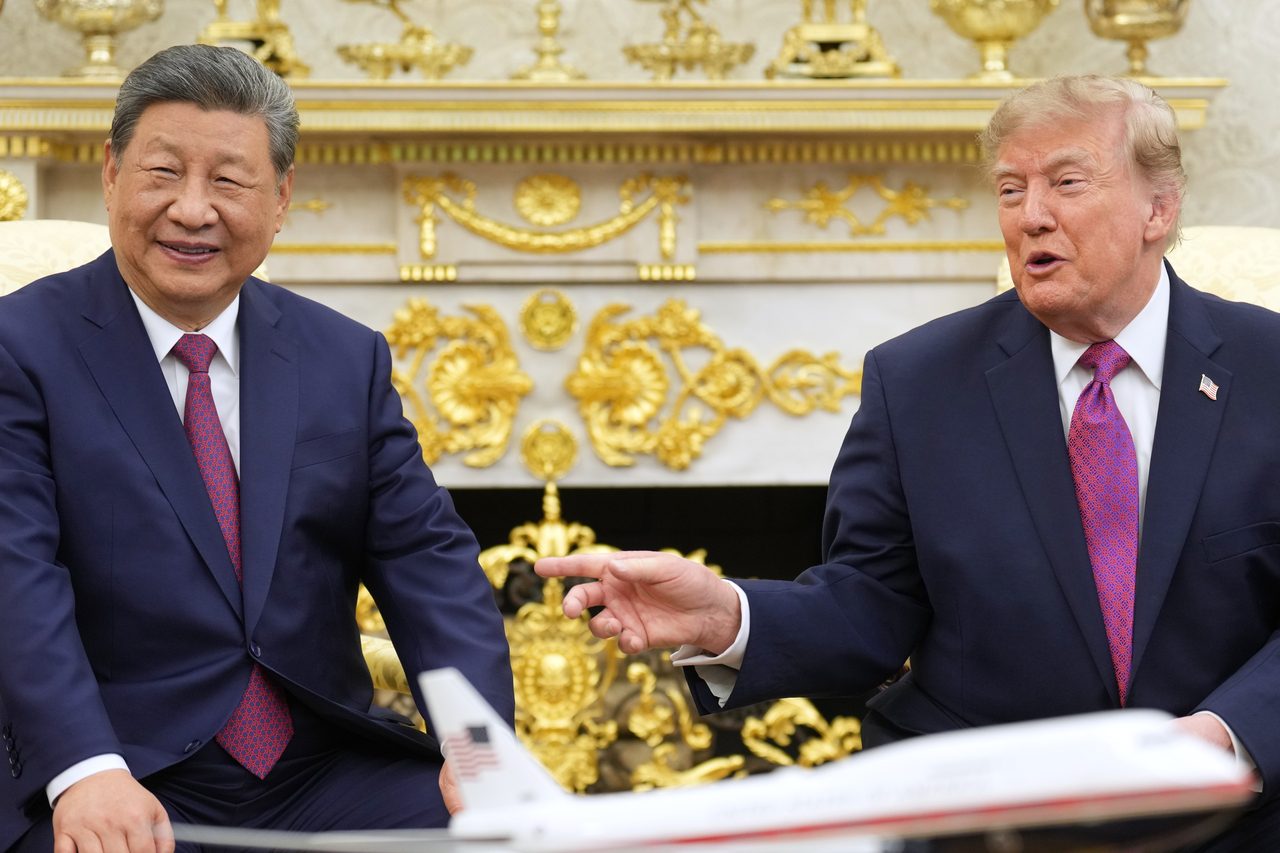
The agreement was reached ahead of a summit between President Donald Trump and Chinese President Xi Jinping, scheduled to take place on the sidelines of the Asia Pacific Economic Cooperation forum in Shenzhen, China, on Thursday. The US has criticized China for failing to fully honor the terms of a trade war truce the two leaders agreed to late last year. Tensions have persisted particularly over rare earth minerals, a sector in which China wields strong influence over global supply chains. Ahead of the summit, the US is pressing China to expand rare earth exports to the US, Japan and other allies, while Washington intensifies efforts to diversify critical mineral supply chains away from China through cooperation with allies and to reduce technological and industrial dependence on Beijing.
Next steps
Helberg said the declaration would help countries develop a shared understanding of the sensitive technologies and critical infrastructure essential to AI development, enabling them to identify areas where supply chain diversification is most urgent and to share relevant information. The Department of State said "the era of Pax Silica is entering a new phase," adding that "no country can secure the foundations of the industrial revolution alone, and the prosperity it brings can only last as long as the supply chains and infrastructure that support it." Participating countries plan to establish working groups to discuss concrete cooperation measures for strengthening AI supply chains, and building economic hubs to attract AI related investment was included among the key priorities.
Sources: The Herald Business · Techmeme
SiTech — AI-powered web development
We build fast, modern websites and bring AI into real business workflows. Have a project or a question? We'd love to help.