Typst 0.15 adds variable fonts and MathML as HTML export advances
Typst 0.15 brings variable fonts, MathML output and multiple bibliographies in one document, while LWN reports that journal submission rules still hold back wider adoption of the LaTeX alternative.
Typst, the open-source typesetting system that compiles markup into PDF, SVG, PNG and, experimentally, HTML, has reached version 0.15. The release shipped in June and was reviewed on 9 September in a guest article for LWN by Lee Phillips. Typst targets technical material and is often described as a possible successor to LaTeX; it is free software under the Apache-2.0 licence, written in Rust.
Variable fonts
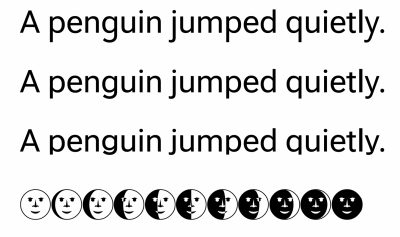
The most visible addition is support for variable fonts, which keep every weight and style variation in a single file instead of a set of separate faces. Typst drives them through axes, which can be discrete or continuous. Phillips tested Roboto Flex, a general-purpose font with 13 axes, and Zycon, which holds no letters but 17 small decorative pictures. On Roboto Flex the YTDE axis changed the length of the descenders without touching other characteristics, which helps avoid collisions with table cell borders, while one Zycon axis shifted the phase of a moon glyph.
MathML and HTML export
HTML output is still experimental, but the new version translates mathematics into MathML: equations render in current browsers without a JavaScript library such as MathJax and without falling back on images. The feature needs an explicit flag: typst c --features html integral.typ integral.html.
Bundles, bibliographies and PDF standards
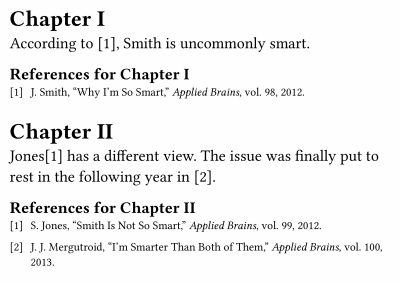
A new bundle mode lets one source file produce a collection of outputs in any format Typst supports, with shared data and links between documents, which suits a web site or a slide deck built alongside its preprint. The release also adds multiple bibliographies per document, each with its own database and numbering, and the ability to target more than one PDF standard in one compilation. The compiler warns about or rejects incompatible combinations, for example PDF 1.7 with the A-1b archival standard. Accessible PDFs are a legal requirement for state and federal bodies in the US and other countries.
What holds adoption back
Typst has 460 contributors on GitHub and an ecosystem of more than 1500 packages. Its creators reject any contribution or description written by a language model, and say openly that Typst is a company as well as an open-source project. Wider adoption faces a harder obstacle: journals that require source files still ask for LaTeX or Word, and very few accept Typst manuscripts. Phillips concludes that Typst is already useful today, and that its becoming the LaTeX replacement its admirers describe could take a decade or two.
SiTech — AI-powered web development
We build fast, modern websites and bring AI into real business workflows. Have a project or a question? We'd love to help.