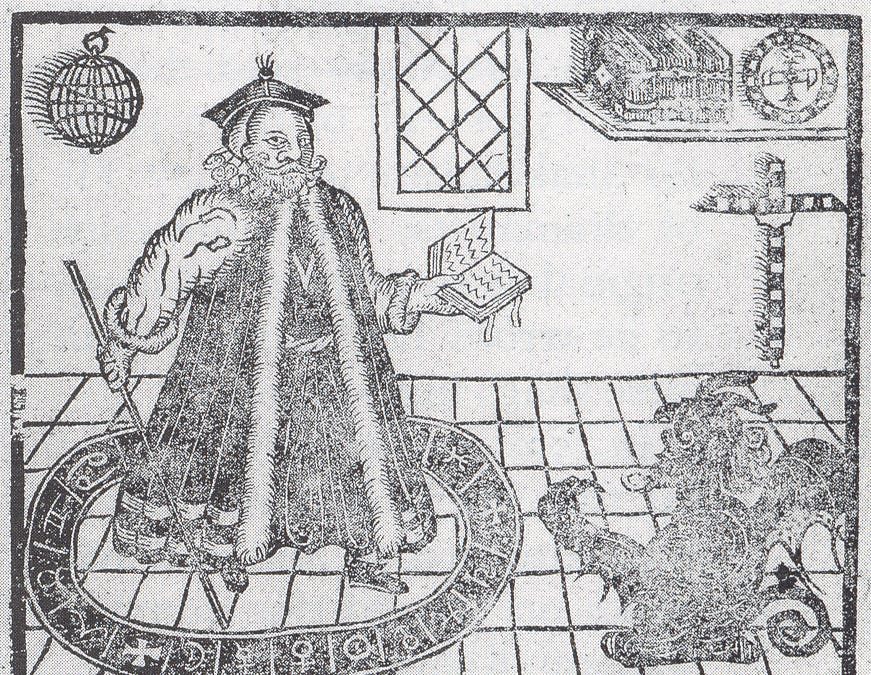
Historian: LLMs can trace alchemical knowledge and decode 17th-century letters
Historian Benjamin Breen tested GPT-6 and Opus 5.5 on open problems in history: alchemical anagrams shared by Newton and Hartlib, a 1941 Enigma message and Dee's coded book. He argues AI labs should fund this kind of research.
Benjamin Breen, a historian of science, has published a post on his Substack Res Obscura arguing that frontier models are now useful for solving historical problems, not just for transcribing documents. He says AI labs and funders should support it.
The post follows the near-simultaneous releases of GPT-6 Sol and Opus 5.5. Breen's conclusion is that pairing historians with frontier models would produce numerous advances in historical knowledge that were not possible last year.
What makes a historical problem tractable
Breen lists the conditions: the data must be digitized and accessible, the task must suit the models' "spiky" strengths, and a solution must be provable or disprovable. That is why reasoning models have advanced in mathematics but not in the humanities, he argues, leaving history a narrow set of open problems, from cryptography to tracing texts across translations.
What the models worked on
According to the cryptologist Frode Weierud, GPT-6 Astra broke a 1941 German army Enigma message. Weierud writes that the key breakthrough was not codebreaking itself but "noticing the full range of information that was available": the model appears to have found a note about newly digitized message collections in the Bundesarchiv.
GPT-6 Astra also analysed "Liber Loagaeth," the coded "book of mystery" that John Dee wrote down with Edward Kelley in the "angelicall language." The model concluded that the book is not in code at all and is almost entirely nonsense syllables; one passage does carry meaning, a reference to the angelic being Bornogo.
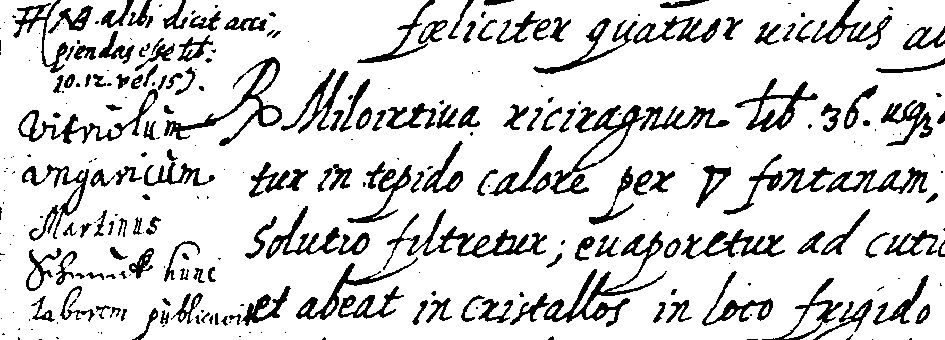
The strongest result came from the Hartlib papers. Opus 5.5 downloaded more than 5,000 primary source files from Samuel Hartlib's archive and cross-checked unidentified sources via Google Books. It found that Isaac Newton and Hartlib used different anagrams for the same alchemical ingredient, Hungarian vitriol, which Breen calls compelling evidence that Newton drew on it.
Already known, and what comes next
Not everything is new. Opus 5.5 partially deciphered two Spanish letters written in Emperor Charles V's secret code, but both had already been deciphered, one in the 1530s and the other in 1916. Breen treats it as a test case: it checked its reading against the 1916 plaintext.
Breen argues the next step should not be researchers spending personal coding-assistant allowances. He proposes digitizing unavailable manuscripts and opening them freely, since access is the bottleneck; free API access and compute for historians; and a public list of history's "millennium problems".
SiTech — AI-powered web development
We build fast, modern websites and bring AI into real business workflows. Have a project or a question? We'd love to help.