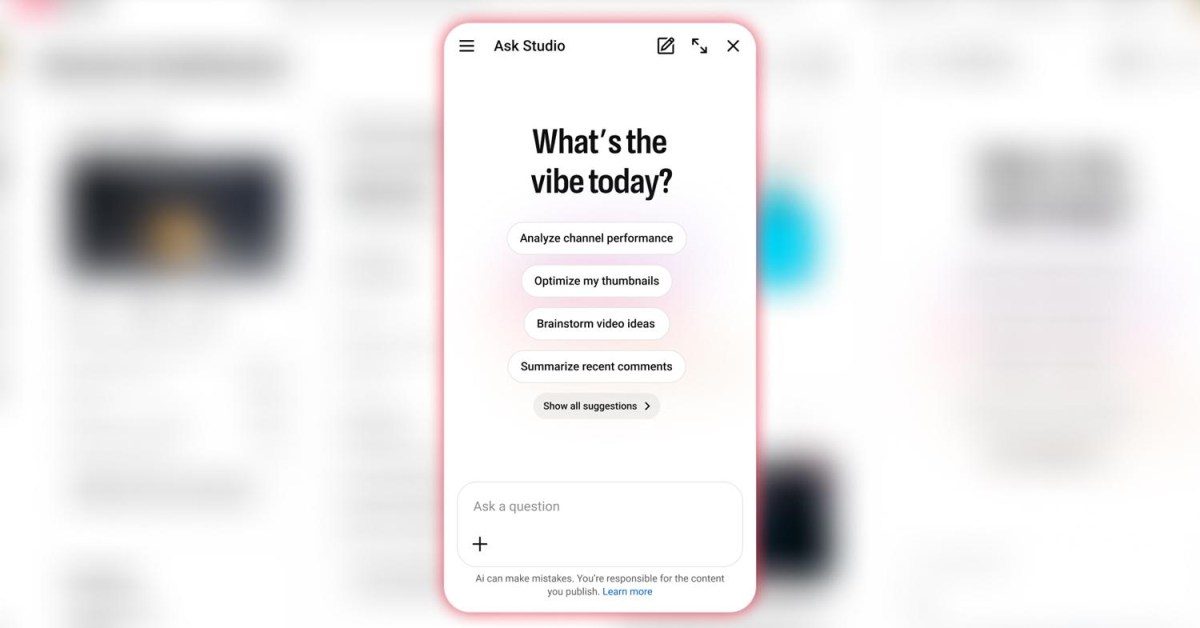
YouTube is building AI creator tools that do almost everything
At its annual Made on YouTube event the company updated its suite of AI tools for creators: an agent that optimises a channel in the background, generated thumbnails and titles, and tests of three versions of one video.
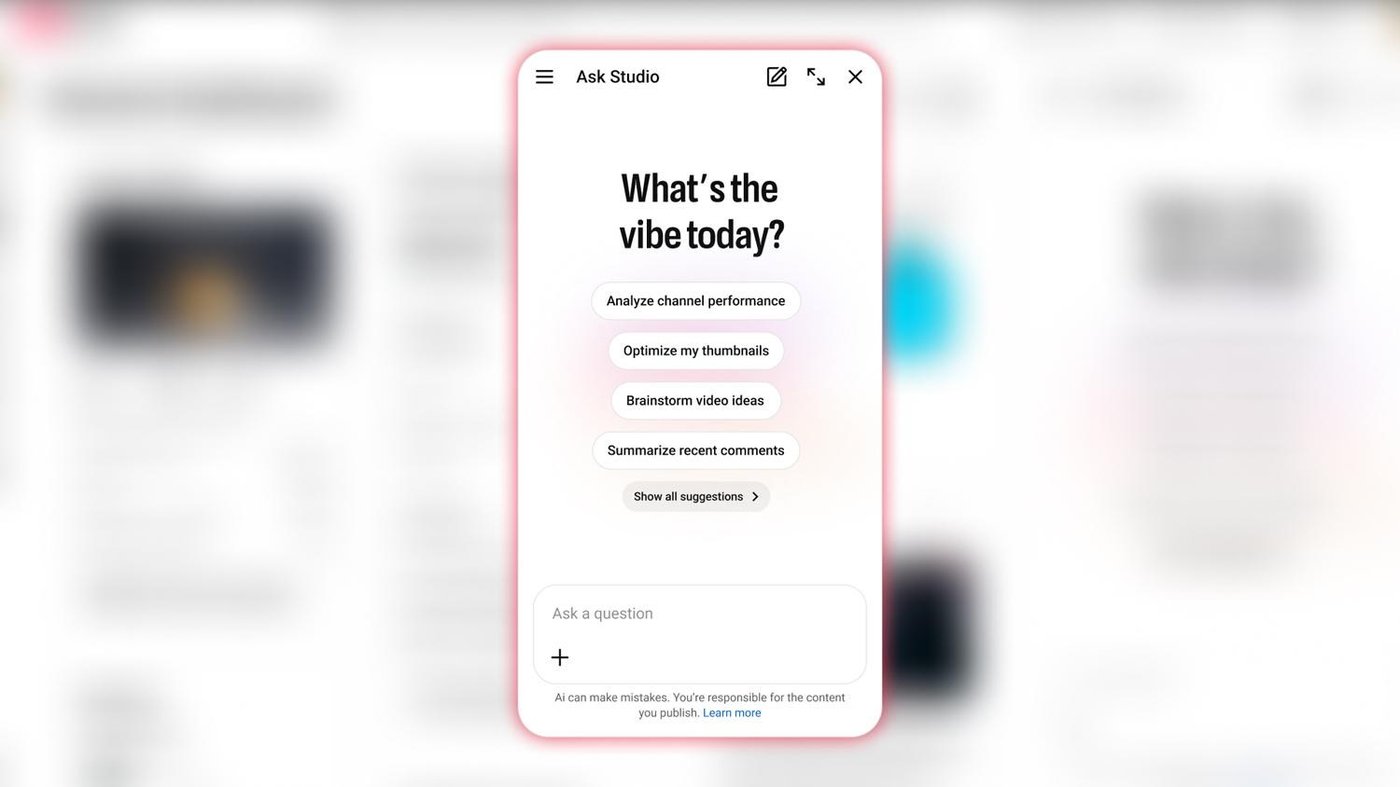
At its annual Made on YouTube event, YouTube announced a new round of AI-powered tools for creators, an update to the dashboard it introduced in 2025. The centrepiece this year is an AI agent that works in the background to optimise a creator's channel.
An agent working through the back catalogue
The agent watches a creator's existing library for clips that have taken on a new life, fit the news cycle or have started trending, then suggests changes to thumbnails or titles so older videos can ride that new wave of relevance. According to Amjad Hanif, YouTube's vice president of creator products, the tool can also draft pitches for brands: it combs through a channel and pulls out demographic and audience data to make a case to potential sponsors.
Thumbnails and titles, generated whole
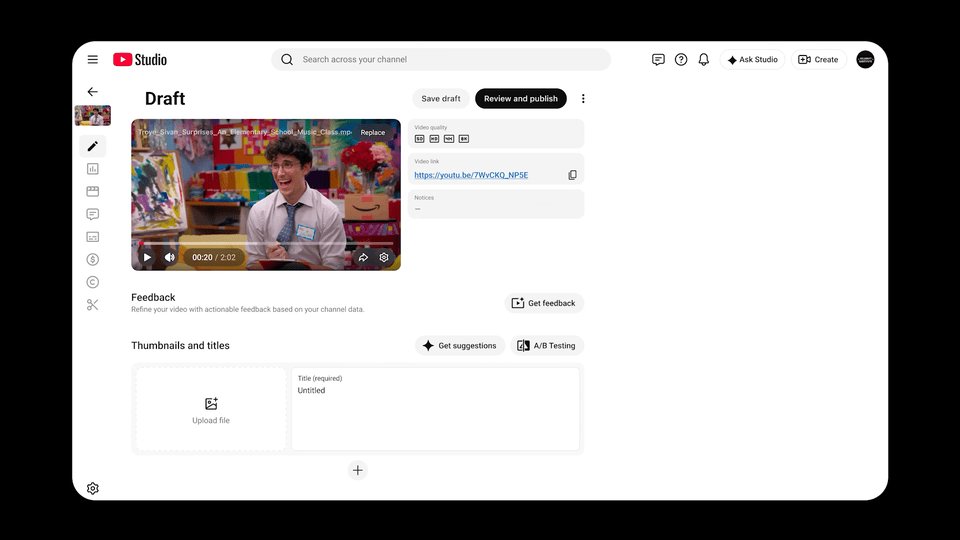
The agent now produces complete thumbnails and titles from the content of an uploaded video, and creators can ask it for feedback on images they made themselves. A separate dynamic thumbnail tool goes past ordinary A/B testing: creators upload up to three images per video, and YouTube assigns the best performer to different audience segments to try to lift watch time.
Three versions of the same video
Tests now extend to the video itself. A creator can put out up to three versions of a clip — one with a different intro or hook, for instance, or a different structure — and each is shown to a small slice of the audience to see which holds attention. The creator can keep the winner permanently, or YouTube switches to it automatically after seven days. Hanif says the system makes sure the three versions are not “dramatically different” from one another.
Efficiency, not replacement
AI remains a sensitive subject among creators: video essayist Hank Green drew criticism this summer after acknowledging he had relied on AI for research. Hanif draws a line between tools that make a creator more efficient and tools that do the job itself. “When it feels like it's not actually from the creator, but the tools have taken over and the tools are producing the content, I think that's kind of where it crosses the line a bit,” he says. Asked whether the suite actually improves metrics, YouTube declined to share data; for Hanif the gain is time saved that goes back into creativity.
SiTech — AI-powered web development
We build fast, modern websites and bring AI into real business workflows. Have a project or a question? We'd love to help.