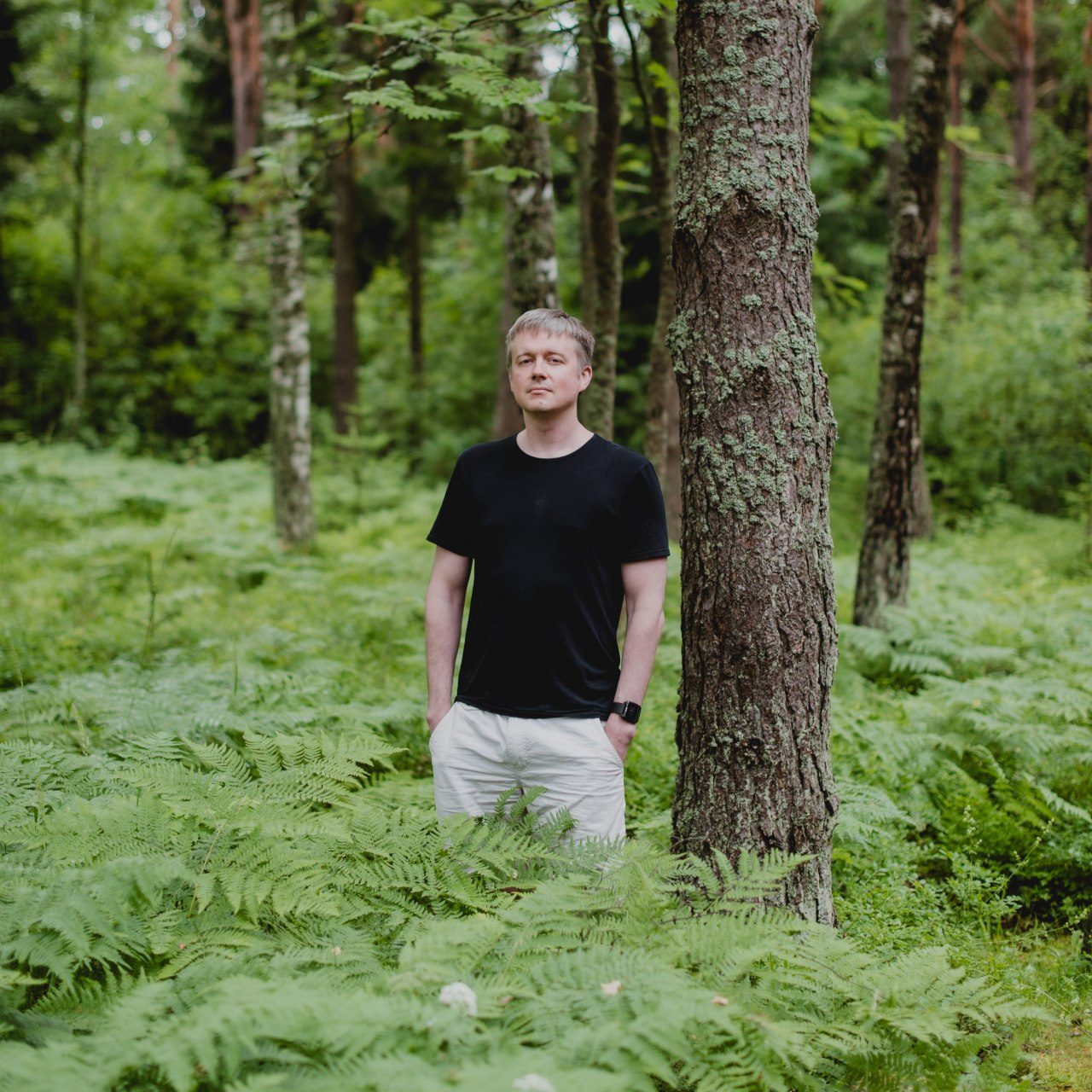
Jaan Tallinn, Anthropic's earliest big backer, warns AI could end humanity
The Wall Street Journal has profiled Jaan Tallinn, the Estonian programmer and Skype co-founder who was one of Anthropic's first investors. He warns that AI could end humanity, yet stands to make billions from the company's expected IPO.
The Wall Street Journal has published a profile of Jaan Tallinn, the Estonian programmer and Skype co-founder who was among Anthropic's earliest investors. In the piece, published on Sept. 25, reporter Kate Clark writes that Tallinn spent the past week in New York at the United Nations General Assembly, telling entrepreneurs, investors and policymakers that artificial intelligence could end humanity.
Tallinn has argued for AI safety for more than a decade. The theme returned to public view in recent weeks, when Anthropic researcher Jacob Coxon resigned and warned that AI could spin out of control. "Unfortunately, I believe we are not taking this threat seriously enough and that we are racing to build a technology that could end humanity," Tallinn said in a statement.
The bet on Anthropic
In 2021, shortly after Dario Amodei and other researchers left OpenAI, partly over safety concerns, and founded Anthropic, Tallinn agreed to lead a $124 million Series A round. It also included Facebook co-founder Dustin Moskovitz, Jane Street's James McClave, the Center for Emerging Risk Research and former Google CEO Eric Schmidt. According to PitchBook data cited by the paper, the round valued the startup at $461 million.
Traditional venture capitalists were largely absent, and much of the venture establishment saw Anthropic as a David to OpenAI's Goliath. Tallinn has said he invested in the hope that his perspective would be heard where dangerous technology was being built.
A decade of warnings
Tallinn, 54, was born in Estonia and raised behind the Iron Curtain; his parents were an architect and a film director. After a degree in theoretical physics he helped build the file-sharing service Kazaa and then Skype, which Microsoft later bought for $8.5 billion. In 2008 the work of AI researcher Eliezer Yudkowsky convinced him of the technology's catastrophic potential.
He is now ranked Estonia's wealthiest person, with an estimated $12 billion fortune, and has funded AI safety initiatives with about $170 million, according to a list of donations he published. He co-founded the Cambridge Centre for the Study of Existential Risk and the Future of Life Institute.
In 2011, on a call with Dario Amodei, he made the prediction he is known for. "I estimate the probability of us dying from an AGI disaster in double digits," he said, according to a transcript. "To me it's as though we are trying to defuse a bomb." Amodei was less certain: "There may or may not be a bomb."
What comes next
Tallinn's stake is expected to grow sharply if Anthropic completes the listing the market expects. Rauno Miljand, managing partner at Tallinn's firm Metaplanet, told the paper it is trying to work out how to use proceeds from a listing that could top $2 trillion in support of humanity. "If it turns out that Anthropic fails and goes to zero, then that's a good thing, because then we probably didn't reach ASI and humanity just bought itself additional years," he said. "It's kind of a win-win."
SiTech — AI-powered web development
We build fast, modern websites and bring AI into real business workflows. Have a project or a question? We'd love to help.