TBC and AWS bring first neuron-derived AI video model to market
The San Francisco startup The Biological Computing Co. is partnering with Amazon Web Services to sell the first “neuron-derived” AI video model, built on a lightweight software layer derived from measurements of real nerve cells.
The San Francisco startup The Biological Computing Co. (TBC) is partnering with Amazon Web Services to bring the first “neuron-derived” AI video model to market. Built on an open-source video model, it is said to run five times faster and 80 percent cheaper than its base model, with better quality.
Partnership with AWS
TBC plans to run the model on AWS Trainium chips, serve it through Amazon SageMaker AI and sell it via AWS Marketplace. All of that is still on paper: only an early-access signup is available now.
“Our partnership with AWS takes neuron-derived AI optimization to commercial scale,” said TBC CEO and co-founder Alex Ksendzovsky. AWS executive Jason Bennett called the approach a way to learn from “the original computer” — the human brain.
The neurons stay in the lab
The name suggests that brain cells do the computing here. They do not. What TBC sells is ordinary software: a proprietary layer that adds less than 0.1 percent to the base model’s size and runs entirely on standard AI infrastructure. Customers need no biological hardware and no new workflows.
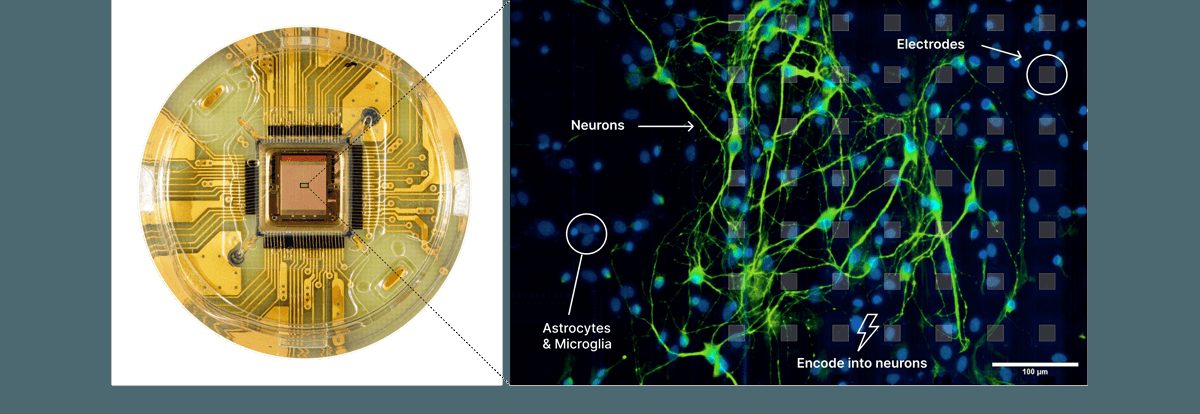
TBC grows cortical nerve cells on chips with 4,096 electrodes, stimulates them electrically and measures how the activity spreads and fades. Those measurements become small modules, called adapters, that plug into existing diffusion models. The neurons themselves never leave the lab.
Gains and open questions
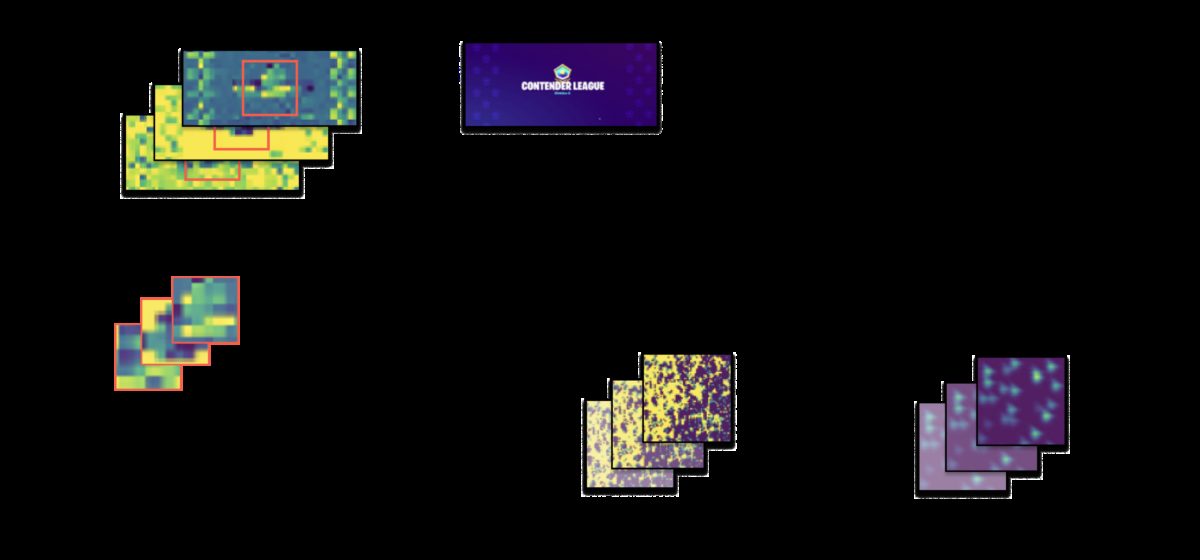
In a blog post, TBC used the open Minecraft world model Oasis, a diffusion model of roughly 600 million parameters, as an example. Such models accumulate errors until the scene blurs into what TBC calls “washout”. The company’s Neural Dynamics Adapter, about 156,000 parameters, encodes one rule read off the cells: activity acts mainly in the neighbourhood and then fades. Across ten test videos it scored roughly 19 percent better than the original and 5 percent better than a LoRA adaptation.
Comparable details are missing for the commercial model: TBC names neither the base model nor the hardware, resolution or quality metric. Five times faster and 80 percent cheaper are also mathematically the same thing — a fifth of the GPU time equals an 80 percent saving. Whether the biological detour beats purely digital techniques such as distillation or caching remains open.
SiTech — AI-powered web development
We build fast, modern websites and bring AI into real business workflows. Have a project or a question? We'd love to help.