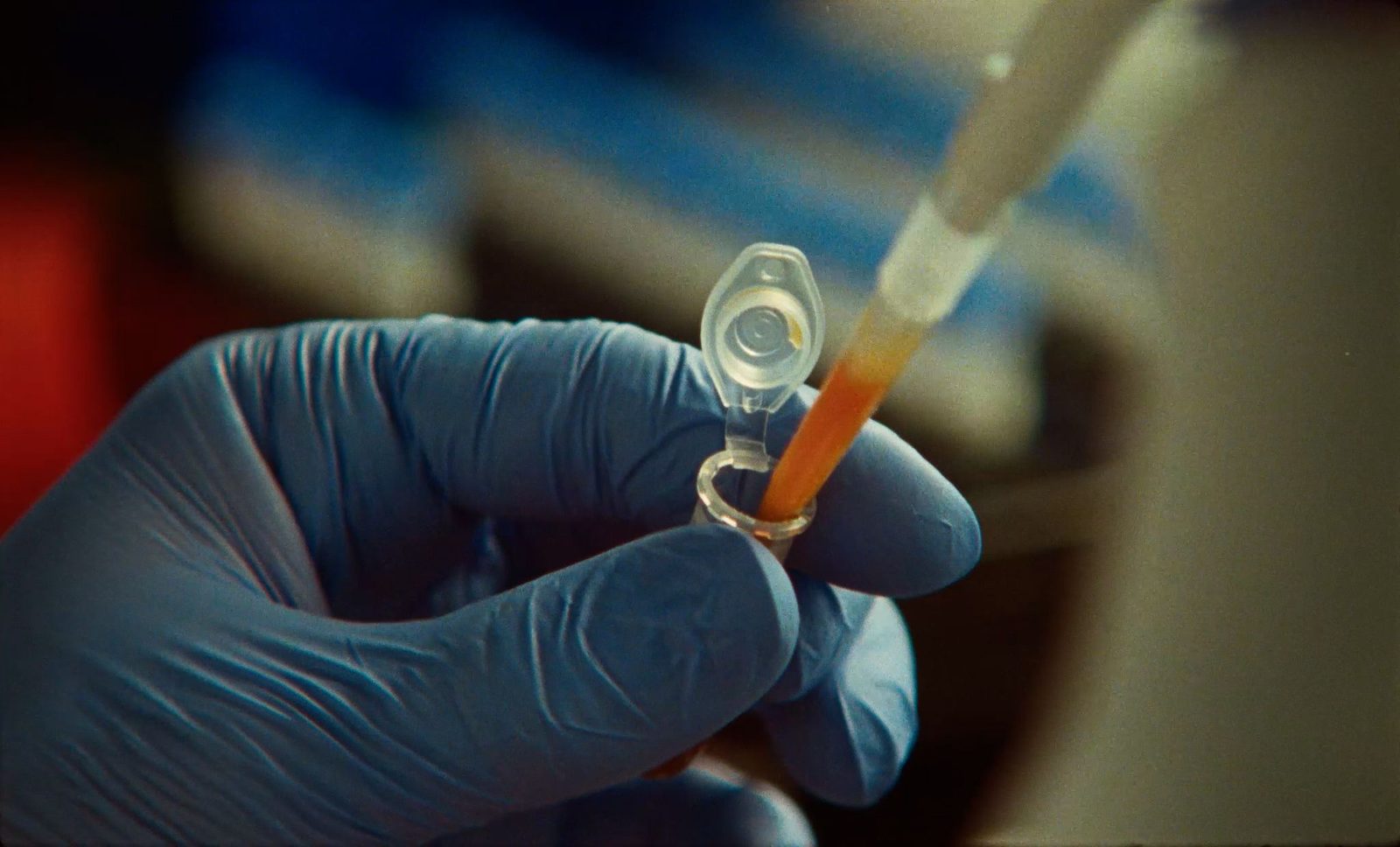
Claude discovers a novel enzyme system with CRISPR-like repeats
Anthropic has published early results from its new life sciences group: Claude found a previously uncharacterized enzyme system in bacteriophages, built around an array of DNA repeats reminiscent of CRISPR.
Early results from a new biology group
Anthropic has published early results from its new life sciences research group, formed in spring 2026 to test whether general-purpose AI models can systematize biological discovery and speed it up. Working from a high-level prompt, with the company's scientists involved only at the start and in the lab, Claude found a previously uncharacterized enzyme system in bacteriophages, the viruses that infect bacteria. Its architecture is associated with an array of DNA repeats, a pattern reminiscent of CRISPR.
The system is named array-associated reverse transcriptases (ART) and is based on a reverse transcriptase, an enzyme that copies RNA into DNA. That enzyme, from a giant bacteriophage, had been described before; according to Anthropic, Claude appears to be the first to notice the system's defining features — an array of non-coding DNA sequences and an accessory protein of unknown function.
950 agents, 21 hours, 210 million tokens
Anthropic says its involvement was limited to the initial prompt and laboratory work. Claude agents combed a large database of DNA sequences, gathered more than 200,000 reverse transcriptases, picked out 3,500 new candidate systems and narrowed them to the 20 most compelling, with a human-readable report for each. The company notes that such analysis can take an expert weeks to months.

One agent spotted a tandem repeat array next to the gene for an odd-looking reverse transcriptase. It counted the repeats and measured their spacing, compared the layout with known systems and checked earlier reports of the pattern. After 21 hours of searching by roughly 950 agents using 210 million tokens, the candidate was confirmed in the lab as a new biological system.
Function still unknown, pre-print released
ART consists of three parts: the reverse transcriptase, a partner gene beside it and a long array of evenly spaced DNA repeats, a layout resembling a CRISPR array. Only a handful of other systems have combined such traits, and all of them are programmable, performing operations such as cutting, copying and pasting DNA. First experiments show the ART array is expressed as a set of short RNAs; the function remains unknown, experiments are under way, and Anthropic has released a pre-print.
Feng Zhang, a CRISPR genome editing pioneer and a professor at MIT and the Broad Institute, reviewed the pre-print: "This is an exciting example of how AI agents can contribute to biological discovery. The identification of RNA-repeat arrays associated with reverse transcriptases is genuinely intriguing and merits further investigation."
SiTech — AI-powered web development
We build fast, modern websites and bring AI into real business workflows. Have a project or a question? We'd love to help.