The Wholesale Plagiarism of Obscure Sorrows
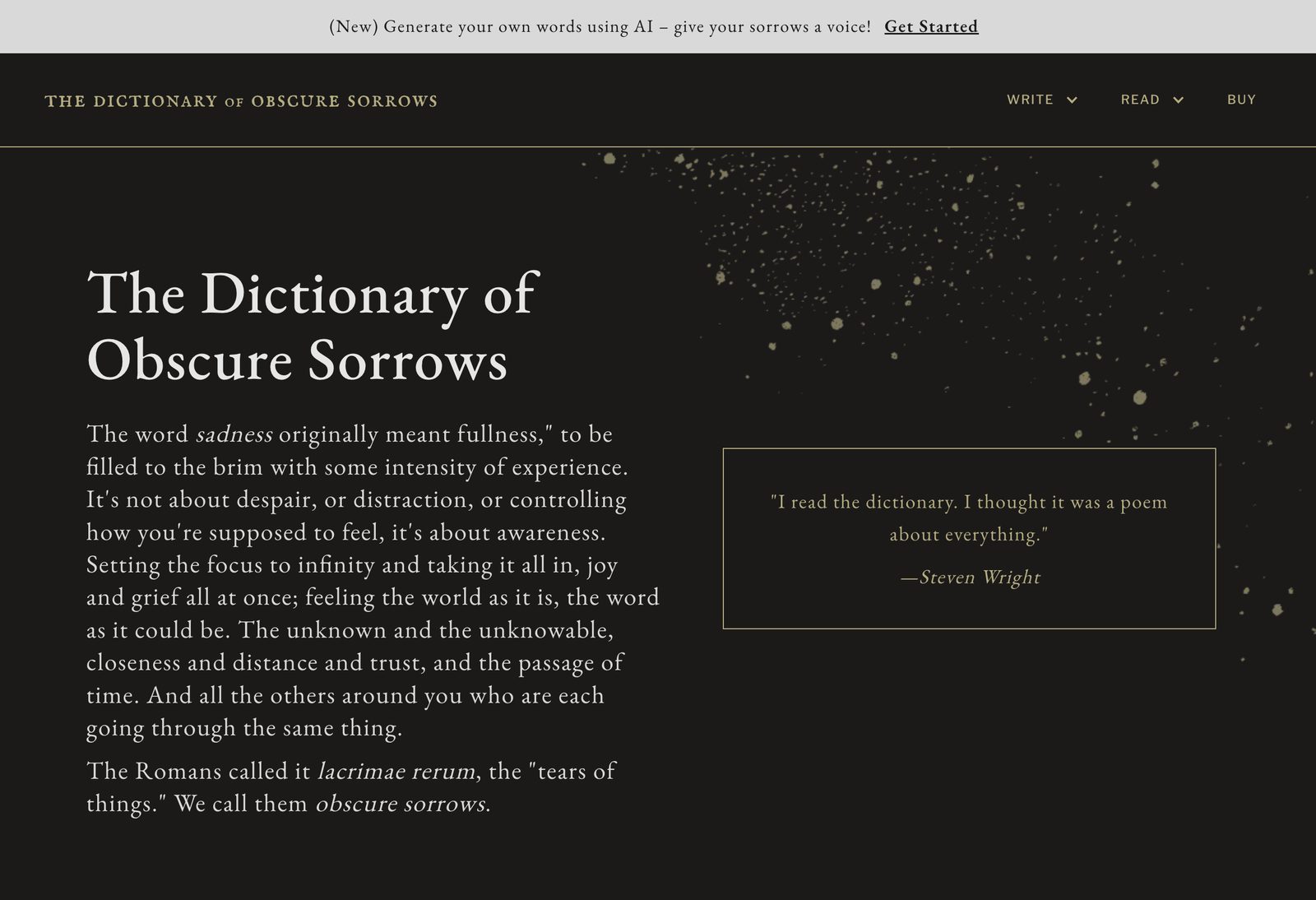
A polished website for John Koenig's Dictionary of Obscure Sorrows republished the entire book with AI-generated art, monetised the traffic and now outranks the official site. Andy Baio traced who built it and why consent was never asked.
A MetaFilter member recently posted a link to what looked like a new website for The Dictionary of Obscure Sorrows, John Koenig's decade-long project to coin words for emotions that have no name. The polished site carried a biography, press mentions and buying links — and the entire text of the book. Andy Baio traced who was behind it.
A slick impostor
Koenig launched the project on Tumblr in 2009 and expanded it into popular video essays in 2013. Its most famous word, "sonder", reached Dictionary.com and Merriam-Webster, and coinages such as anemoia, vellichor and monachopsis also found lives of their own. A book deal with Simon & Schuster followed, and the book became a New York Times bestseller in November 2021. The new site appeared around August 2023 — with no reference to it from the official Tumblr page or social media — on a different domain: thedictionaryofobscuresorrows.com instead of dictionaryofobscuresorrows.com.
The site credits name Qontour, formerly Prompt Digital, a web design and marketing agency in San Francisco, whose portfolio says it "built the interactive digital platform" in Webflow with an AI-powered image library. Asked whether he was involved, Koenig replied by email: "Yeah man, I had nothing to do with it. Don't know what to think or do about that, as the site is pretty slick. Nicer than my own, really."
Copyright and confusion
Koenig's original photo-collage illustrations are gone; each word is illustrated with an AI image made with DALL-E 2, full of that model's typical errors. A banner invites visitors to generate their own words with AI, and a Submit A Sorrow feature uses GPT-4 to produce new words, etymologies and definitions. The footer says the dictionary content is "© John Koenig – All rights reserved" while licensing user submissions under CC Zero, and the site carries Amazon affiliate links created under the agency's former name.
Being a fan does not grant the right to republish an author's book, and the outcome is visible in search: the unofficial site is the top result for nearly every query about the book, including its title, the words coined in it and Koenig's own name. ChatGPT and Gemini both link to the bootleg as the official website and state that Koenig created it. Simon & Schuster filed two DMCA takedowns with Google in July of last year; they had no effect.
AI and consent
Baio argues this is more flagrant than the usual laundering of human work through a model into something different enough to avoid legal trouble. It is not surprising from an agency that leans heavily on generative AI: Qontour says every page of its own website was written in Claude, using an author persona called "Q". What is missing, Baio writes, is consent — the original sin of AI.
SiTech — AI-powered web development
We build fast, modern websites and bring AI into real business workflows. Have a project or a question? We'd love to help.